Elements of Stories posts
Showing posts with label Elements of Stories. Show all posts

Place is memory

We are physical, sensory beings living in physical sensory bodies and that is how we navigate the world. If you want your readers to live inside your story, not just be told about events from a distance, you have to give them a physical sensory world to live inside. And that means describing it.

Description often gets a bad rep in writing, accused of "bogging the story down" or "swathes of unnecessary description" - as if description had no part in story or were always, by definition, unnecessary. We might feel like that now about some nineteenth-century novels. When I was sixteen, I taught my brother and his two best friends their final-year setwork, Thomas Hardy's Far from the Madding Crowd (oh, the things we do for love, or at least for teenage crushes on brothers' friends) and the endlessly eloquent descriptions of fields drove all three boys beserk with frustration. Even for the literature-loving younger sister, three pages on one vista was hard to stomach. So yes, all that rhapsodising about a single "featureless convexity of chalk and soil" may well feel unnecessary and bog the story down, to a contemporary reader, or at least in a contemporary book. A total lack of description, however, is just as bad, if not worse.

Making the Plot Matter


Making it Matter

Supposedly, we read stories "to find out what happens" – but in most stories, especially genre stories, we actually know the ending.  Anne Boleyn gets her head cut off. The romance ends with the couple together. The good side wins in fantasy. Yes, people play within and against a genre – "grey" characters in fantasy don't split into good-vs-evil - but still, the central rules hold. What if Mrs Coulter had "won" in His Dark Materials, Lyra's quest failed and Lyra dead? Or if Katniss was killed in The Hunger Games?

We know that's not going to happen. So why do we keep reading? Why do we care? Why does it matter?

Part of the reason is that the reader and author have a secret contract: the reader pretends not to know the ending, in return for the ending they were promised; the author will deliver the promised ending, and "hide" it from them for most of the book. The secret to that is plot-layering: the plot is rich enough to distract the reader from the ending. (That's where many genre romances fail, incidentally: the plot's too thin to hold the happy ending at bay and there's only so long that two rational human beings can sustain a misunderstanding.)

Often, in layering the plot, writers pull back from "big events" – they're "too melodramatic", "too unrealistic" - but in real life, people do die. (Everyone dies. Eventually. As George RR Martin is so intent on reminding us.) Friends do turn against each other. Shocking revelations do come to light, whether through the old trope of the box in the attic or the newer style of seeing inside someone's computer, or phone. The "unrealistic" / "melodramatic" defence is often a cover for being nervous of the big stuff, the good as well as the bad. But the story needs its chiaroscuro: its moments of bright light and deep dark.

That said, one can easily go too far: "A really BIG problem is one that affects THE WHOLE WORLD! There's a nuclear bomb in Rome!" Fine if you're writing action thrillers, perhaps, but you don't always need to make the problem bigger: sometimes you just need to zoom in closer and make it matter more. What's more, throughout this quest for obstacles and plot-layers, we often forget the ordinary stuff. We give our characters one giant problem to solve (Ebola outbreak! Raiders on the coast! The man you love is dying!) and make everything else in their lives trouble-free. Their fairy godmother takes care of everything else, from their clothes to their home to the reliability and health of everyone around them. 

Restoring normal, practical domestic / relational / financial / etc problems does two powerful things. First, it's a great source of material. It's not a distraction from your plot: make it part of your plot. Second, it's verisimilitude in a bottle: it grounds the story to make it convincing, realistic; it adds that grainy texture of real life that makes us believe even more strongly in the character and hence care even more about their story. 

Ultimately, what matters in the story is what matters to the character. And the more we know the character, the more we care about what matters to them.

Creating a sense of the time

A Sense of Time
"The Pooles, too, were very deliberately leaving the provinces, making themselves metropolitan. They had left almost everything behind - the three-piece suite, the Wilton carpets, the glass-fronted bookcases, the family silver. Elinor Poole said to Alexander that the exciting thing was that the flat was flat, the rooms, all in a row, just rooms. You could sleep or eat or work in any or all of them. They furnished it with fitted cord carpets in silver and greys, with white paint, geometrically patterned curtains. Carpenters fitted streamlined shelves and cupboards. The children had bright Finnish blankets, scarlet, blue, yellow. They put up a Ben Nicholson print, a Matisse poster ... Elinor grew her yoghurt in a white bowl with a beaded muslin cover: these where days when the English had not in general seen any yoghurt, let alone taken to having it delivered in sterile painted plastic pots." Still Life, AS Byatt

One of my favourite aspects of AS Byatt's quartet is her close attention to its period. Writing just a few decades after the time it's set, she is as meticulous about its period detail as if she were writing a historical novel. 

The pleasure of a strong sense of time is partly in the rich texture it creates. A sense of time permeates everything and every detail can evoke the period. What food do they eat? (Remember those ubiquitous parsley garnishes of the 1980s? The sudden profusion of rocket and balamic in the 90s? Can you remember what year you learnt to pronounce "quinoa"?) What colours predominate? (Remember the duck-egg blue and soft brown everywhere in the late noughties?) What do they clean themselves and their houses with, what products do they buy? (Anyone remember the harsh green fairy soap?) What were their names? What about their slang, their jobs, their homes, their furniture, their music? What was completely new and what did they want to leave behind in the past? 

But the sense of time goes beyond the textural, sensory world of objects, lovely as that is to revel in. It's ingrained in their views, their assumptions, their expectations. It's not just the texture of the story: it's the shape of it. In the Story Elements course, we explore how giving a premise a strong sense of time, and reshaping it to its era, can turn even a flimsy idea into a powerful story. 

A premise about a nurse who heals by non-medical means and gets engaged: so far, a bit nondescript. But what if it's a Victorian suffragette's battle to keep her job after marriage and insistence that "old wives' remedies" do work? Or a 1960s nurse's secret introduction of psychotherapy and talking cures into a hospital for traumatised Vietnam vets? Or a sangoma in the Boer War?

That's also why, when we're doing research in class, I get my students to do their initial research before I give them the story idea. It seems counter-intuitive, but it works better: they explore the time more open-mindedly, without zeroing in on the exact details around the story. The time comes first, with its own priorities and issues, and then the story gets nested within that.

No story is without a sense of time. Even if you think it's simply set "now", our now is already so vividly distinct from even our recent past, so ingrained with textures, opinions, possibilities, and constraints. Its distinctive nowness is a constant source of vibrant narrative detail. Everything that makes the world come vividly alive, for the reader.

Douglas Admas famously came up with this theory on technology: 

I've come up with a set of rules that describe our reactions to technologies:
1. Anything that is in the world when you’re born is normal and ordinary and is just a natural part of the way the world works.
2. Anything that's invented between when you’re fifteen and thirty-five is new and exciting and revolutionary and you can probably get a career in it.
3. Anything invented after you're thirty-five is against the natural order of things.
(from The Salmon of Doubt)

The same is true of how we see our own time, if we don't stop to think about it. But what if we do stop, if we do think about it, if we tunnel back through our memories just five or ten years? We start to notice the sharp differences from the past that help us observe the sharp distinctness of the now. For stories set in the past, the creative effort and discoveries come from research. For stories set now, that creative work is the art of noticing – through comparing with the past. And that in turn informs the stories we write into the future.

If you'd like to learn more about all the elements of storytelling, and enrich your storytelling in a dozen different ways, the Story Elements course explores the 12 key elements of stories through hands-on activities and real writing processes, in lively workshop-style classes. 


When your characters all look like you


It's an easy mistake to make: creating characters too much like you. As you develop in writing, you learn to build a more various cast and include some personality contrast. We're still writing from within our own experience, though, and unless we notice that our experience isn't universal, we just keep on replicating it. I only discovered recently that most people don't see music - so I have to comb back through my novel, checking that my characters aren't all synaesthetic. I'd just assumed that everyone sees the world as I do, including the music. An issue like that can just be idiosyncratic. When it comes to the experience and assumptions of our various identity positions, though, that matters more. We think we're writing a varied cast, but actually every character looks like us.

Should your characters be sympathetic?


Should Your Character Be Sympathetic?

Take a group of writers, throw in the question "Should characters be sympathetic?", and sit back to enjoy the argument. (You can usually guarantee the argument by including at least one literary author and at least one commissioning editor.)

In the Characters session on the Story Elements course, we create characters with a bunch of prompts and then check the emerging characters against three criteria. Is the character complex? Real people are contradictory, have mixed feelings, think one thing and do another, behave out-of-character, and have different sides to them. While we're inventing characters, we don't want to make them too smoothed-over and consistent, or they'll end up one-dimensional. Is the character interesting? Most engaging characters have something unusual, interesting, or larger than life about them. Even the most humdrum person is unique and distinctive to themselves. The most contentious question, though, is this: is the character sympathetic? That question comes with a massive caveat

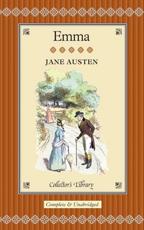
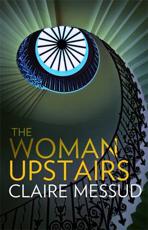
Whether characters should be sympathetic has always been a matter for argument. Jane Austen wrote about Emma, "I am going to take a heroine whom no one but myself will much like," and expected that the book's popularity would suffer as a result. Women writers and characters seem to get more flak, for not being likeable: Claire Messud, author of The Woman Upstairs, was told by her interviewer, "I wouldn’t want to be friends with Nora, would you?" and Messud rightly flipped:
For heaven’s sake, what kind of question is that? Would you want to be friends with Mickey Sabbath? Saleem Sinai? Hamlet? Krapp? Oedipus? Oscar Wao? Antigone? Raskolnikov? Any of the characters in The Corrections? Any of the characters in Infinite Jest? Any of the characters in anything Pynchon has ever written? Or Martin Amis? Or Orhan Pamuk? Or Alice Munro, for that matter? If you’re reading to find friends, you’re in deep trouble. We read to find life, in all its possibilities. The relevant question isn’t ‘Is this a potential friend for me?’ but ‘Is this character alive?’
Somewhere along the line, sympathetic and likeable have become confused and we need to separate them out again.  Sympathetic means someone you can sympathise with, not the French sympathique (which does mean likeable). So really, what we're asking is "Can we sympathise with your character? What would make us like them more or understand them more? They don’t have to be 'nice', but we want to be able to get behind their eyes." That distinction – like them more or understand them more – is important. One student offered the alternative she uses: Can I respect this character? That question works for the strengths and weaknesses of the character she's currently creating, but wouldn't apply to every character. Even returning to the original meaning of a "sympathetic" character doesn't mean every main character should be sympathetic.

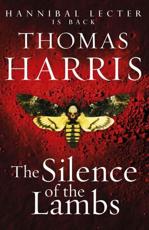
The value of sympathising with a character, of being able to look through their eyes, means that we care about their aims and wishes, even if we think they're wrong. In Silence of the Lambs, Hannibal Lecter is certainly monstrous, but we have moments where we can see through his eyes, care about what he wants: "I've been in this room eight years, Clarice. I know that they will never, ever let me out while I'm alive. What I want is a view. I want a window where I can see a tree, or even water." Lecter hasn't become likeable, but in that moment, we can feel alongside him that intensity, that desperate and so small request. Lecter isn't the main character, though: for most of the book, we're in the company of Clarice.

A story's personal stakes depend on how much we can sympathise with the character, in this sense. Certain genres rely especially heavily on personal stakes: literary fiction (we'll argue about whether that's a genre another time) and romantic fiction especially. The character's desires and aims are what drive these stories; the degree to which we care about their desires and aims is the degree to which we sympathise with them.

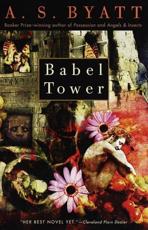
In AS Byatt's tetralogy (The Virgin in the Garden, Still Life, Babel Tower, and A Whistling Woman), Frederica is dissatisfied and frequently annoying – often to those around her and sometimes to the reader as well. She's not especially likeable and the narrative doesn't rely on us liking her. At times, though, it does rely on our sympathising with her, being able to care about her desires and aims as strongly as she does, especiall in Babel Tower: in her silent, hemmed-in struggle to retain her selfhood when she's living with her baby surrounded by her husband's staff; in her fight for custody; in her frustrating and uncompromising refusal to foist all the blame onto him. We couldn't care what happens in those parts of the plot if we didn't care about Frederica's desires and aims in them.
Similarly, In Kazuo Ishiguro's Remains of the Day, Stevens is not "likeable" in the banal sense. You would not want him to "be your friend". He is pompous and verbose from the start (hilariously so). As the novel progresses, he appears increasingly complicit in wrongdoing and morally weak. His inability to show feeling or compassion in even the most severe circumstances is shocking. Yet somehow, it breaks our hearts. We care enough that his father's downfall and his own inability to mourn make us grieve. We yearn for him to let his guard down and find happiness with Miss Kenton, even as we realise he never will. Our grief for him stems from the pathos and poignance of his character, but we do care.

Can you write a novel with a wholly unsympathetic character, with whom the reader feels no shred of fellow feeling?  Ian McEwan did, with Solar. Michael Beard is revolting, selfish, and entirely unlikeable from start to finish. Nothing he does inspires our sympathy or any desire for him to "win". Although we hear the story from his point of view, we never share his point of view. His aims never become our hopes for the narrative. Personally, I found it a difficult and unpleasant read – and I think that's fine. The main character is a difficult, unpleasant person to spend time with. That doesn't make it a bad novel.

Should your characters be sympathetic? I don't believe that there is an answer; it's not binary. I don't believe in rules, in writing: I believe in principles. I compare it to artists learning about art. Artists don't have to work out the principles of perspective from scratch for themselves; they're allowed to learn them. But you can learn how perspective works and then be Picasso. You don't have to obey principles, only understand how they work. Having a "sympathetic character" is a principle, not a rule: we find out what the principle is, we learn the effects on a story of sympathetic and unsympathetic characters, and then we decide what we want to do, understanding what the effects will be.

The Writers' Greenhouse CommunityWant more writing advice? In The Writers' Greenhouse Community, you'll get expert advice on tap, help developing your writing, and the chance to connect with your writing community.

Find out more and join here.

Coming Next:

Summer Workshops
AUGUST 2026
OXFORD, UK

Lively one-day creative writing workshops for adults on Saturdays in August.

READ MORE AND BOOK

Meddling with Poetry
OCT–NOV 2026
Online | In person

Explore a variety of poetry possibilities in lively workshop-style classes.

BOOKINGS NOW OPEN


Get new blogposts and updates by email

I won't share your email with anyone else. You can change how many emails you get at the bottom of each email, from "All the goodies!" through to "Just the monthly round-up". Add megan@thewritersgreenhouse.co.uk to your address book if you want to keep the emails from vanishing into spam.