Kazuo Ishiguro posts
Showing posts with label Kazuo Ishiguro. Show all posts

Imaginary Worlds ~ suggested reading batch 3 of 4


The reading list for the Imaginary Worlds course is a fantastic cross-section of the imaginary genres, from classic epic fantasy to literary fiction to dystopias to steampunk. Each week on the Facebook page I'm introducing one of the 16 books in more detail, and each month I'm gathering up a cross-section of four of the books here. (By the way, if you think you don't like reading fantasy or sci-fi, you should read this article first: Why you like reading fantasy and science fiction even though you think you don't.) This month, we have The Hunger Games by Suzanne Collins, The Fifth Season by NK Jemsin, The Name of the Wind by Patrick Rothfuss, and Never Let Me Go by Kazuo Ishiguro.


The Hunger Games by Suzanne Collins

Sixteen-year-old Katniss Everdeen regards it as a death sentence when she is forced to represent her district in the annual Hunger Games, a fight to the death on live TV. But Katniss has been close to death before - and survival, for her, is second nature. 'The Hunger Games' is a searing novel set in a future with unsettling parallels to our present. Welcome to the deadliest reality TV show ever...

This is one of the best Young Adult dystopias out there - and that's a broader category than you might realise! The films did the books a real disservice, so if you've only seen the films, get hold of the books immediately. The films were faithful to the books' events, but they completely lost the sense of Katniss's interiority, which is one of the most powerful aspects of the books. Throughout the events of being filmed, hated or adored by the public, dressed up, paraded, etc, Katniss is extremely aware of other people's perceptions of her and plays that with brutal intelligence. This is the flip side of "the male gaze" - the young woman who despises the system and knows exactly how to game it for survival, however reluctant she might be to do that. In the film, all that is shorn away, and all we're left with is Katniss's outward display. I don't know how one would show interiority in a film, but it felt like the most crucial aspect of the book had been stripped out.

What this book does especially well: The political and economic realities of this world play out in every single aspect of these characters' lives, right from the first scene where Katniss illegally goes hunting. It's a masterclass in how to turn politics and economics, which might seem "dry" subjects, into the stuff of story..

The Fifth Season by NK Jemsin

This is the way the world ends ... for the last time. It starts with the great red rift across the heart of the world's sole continent, spewing ash that blots out the sun. It starts with death, with a murdered son and a missing daughter. It starts with betrayal, and long dormant wounds rising up to fester. This is the Stillness, a land long familiar with catastrophe, where the power of the earth is wielded as a weapon. And where there is no mercy..

Given the book's unbelievably gloomy blurb, I expected an extremely gloomy and dystopic book, perhaps even verging on grimdark - one of the few speculative-fiction subgenres that I actively avoid. But that's not how the book felt at all. The events, on reflection, are often dark, but the book itself is good at chiaroscuro, and rather than dark it feels absorbing, gripping, fascinating. It also has a powerful moral centre, whereas grimdark is more usually amoral. I'd also call it fantasy rather than dystopia, even if it is about a world ending, because it's set in a world that's not ours, with magic..

What this book does especially well: beautiful literary prose, playing with the language and idiom of its world, and a variety of magic unlike anything I've found in other fantasy.


The Name of the Wind by Patrick Rothfuss

'I have stolen princesses back from sleeping barrow kings. I burned down the town of Trebon. I have spent the night with Felurian and left with both my sanity and my life. I was expelled from the University at a younger age than most people are allowed in. I tread paths by moonlight that others fear to speak of during day. I have talked to Gods, loved women, and written songs that make the minstrels weep. My name is Kvothe. You may have heard of me' So begins the tale of Kvothe - currently known as Kote, the unassuming innkeepter - from his childhood in a troupe of traveling players, through his years spent as a near-feral orphan in a crime-riddled city, to his daringly brazen yet successful bid to enter a difficult and dangerous school of magic. In these pages you will come to know Kvothe the notorious magician, the accomplished thief, the masterful musician, the dragon-slayer, the legend-hunter, the lover, the thief and the infamous assassin.

The Name of the Wind is epic fantasy at its best, and rather than centering around castles and people of power, it centres around a more marginal figure, at least politically. It's rich, fascinating, completely absorbing - when you've run out of Robin Hobb and are wandering the house in despair for what else might match up, reach for this. Much of the first book is set in the university, with the particular enjoyment that brings - think of the pleasure of reading about Hogwarts, in Harry Potter. Well, this is the grown-up version of that. It's also a valuable reminder that tension in a book, especially a fantasy book, doesn't have to be from huge brewing wars and dramatic quests, but can be something as seemingly ordinary as a character you care deeply about trying to raise the money for their next term of education.

 Money is Rothfuss's particular thing - currency, actually - and he pays close attention to it, and manages to make it equally compelling for the reader. If you ever meet him, ask him about his currency system, and then sit back to enjoy the flow of talk and his burgeoning beard for the next few hours. Make sure to stock up with a bottle or barrel beforehand. Everyone has their particular geekery, and this without doubt is Rothfuss's - though he also has a fabulous line in inventing idioms and figures of speech from within his world, or using our idioms and giving them new origins from his world.

My only criticism is that his female characters can be quite weak - absurdly fey, or, if they're a "strong character", borderline psychotic. I've noticed a few male fantasy authors gamely try to write "strong female characters" and end up creating these erratic psychotic people whose behaviour is completely inexplicable (to the reader as well as the hapless man) and in any man would be recognised as violent, abusive, and manipulative. I wouldn't mind if the book seemed to recognise that she's mad as a bag of rats and behaves inexcusably, but she always seems to get a pass. That's the main love interest, alas, but some of the secondary female characters seem quite normal, so that's good.

What this book does especially well: economics, plot tension through small-scale events building, and playing with language.


Never Let Me Go by Kazuo Ishiguro

In one of the most memorable novels of recent years, Kazuo Ishiguro imagines the lives of a group of students growing up in a darkly skewered version of contemporary England. Narrated by Kathy, now 31, Never Let Me Go hauntingly dramatises her attempts to come to terms with her childhood at the seemingly idyllic Hailsham School, and with the fate that has always awaited her and her closest friends in the wider world. A story of love, friendship and memory, Never Let Me Go is charged throughout with a sense of the fragility of life.

It's almost impossible to say anything about this book without committing massive spoilers, or just plumping for adjectives like "extraordinary" and "thought-provoking", so for this, I'm just going to have to say, READ IT. Don't even look at the back-cover blurb, just READ IT. You have to trust me on this. I'm not going to be the one who spoils it for you.

What this book does especially well: JUST READ IT. Sorry, I can't say more.


The Imaginary Worlds course starts on 9 Feburary 2017 - email me at megan@thewritersgreenhouse.co.uk to book or read more about it below.


Develop your world-building to improve or invent your own imaginary worlds: the Imaginary Worlds course is an eight-week evening course on writing the genres of imaginary worlds, starting February 2017, and covering... • the many genres • how to constrain magic • making unlikely stuff convincing • your world's physical detail • why your world matters • ripple-through effects • names and language • your characters' political and economic realities • techniques for exposition. Read more about it and book here.

Should your characters be sympathetic?


Should Your Character Be Sympathetic?

Take a group of writers, throw in the question "Should characters be sympathetic?", and sit back to enjoy the argument. (You can usually guarantee the argument by including at least one literary author and at least one commissioning editor.)

In the Characters session on the Story Elements course, we create characters with a bunch of prompts and then check the emerging characters against three criteria. Is the character complex? Real people are contradictory, have mixed feelings, think one thing and do another, behave out-of-character, and have different sides to them. While we're inventing characters, we don't want to make them too smoothed-over and consistent, or they'll end up one-dimensional. Is the character interesting? Most engaging characters have something unusual, interesting, or larger than life about them. Even the most humdrum person is unique and distinctive to themselves. The most contentious question, though, is this: is the character sympathetic? That question comes with a massive caveat

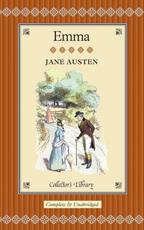
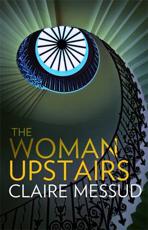
Whether characters should be sympathetic has always been a matter for argument. Jane Austen wrote about Emma, "I am going to take a heroine whom no one but myself will much like," and expected that the book's popularity would suffer as a result. Women writers and characters seem to get more flak, for not being likeable: Claire Messud, author of The Woman Upstairs, was told by her interviewer, "I wouldn’t want to be friends with Nora, would you?" and Messud rightly flipped:
For heaven’s sake, what kind of question is that? Would you want to be friends with Mickey Sabbath? Saleem Sinai? Hamlet? Krapp? Oedipus? Oscar Wao? Antigone? Raskolnikov? Any of the characters in The Corrections? Any of the characters in Infinite Jest? Any of the characters in anything Pynchon has ever written? Or Martin Amis? Or Orhan Pamuk? Or Alice Munro, for that matter? If you’re reading to find friends, you’re in deep trouble. We read to find life, in all its possibilities. The relevant question isn’t ‘Is this a potential friend for me?’ but ‘Is this character alive?’
Somewhere along the line, sympathetic and likeable have become confused and we need to separate them out again.  Sympathetic means someone you can sympathise with, not the French sympathique (which does mean likeable). So really, what we're asking is "Can we sympathise with your character? What would make us like them more or understand them more? They don’t have to be 'nice', but we want to be able to get behind their eyes." That distinction – like them more or understand them more – is important. One student offered the alternative she uses: Can I respect this character? That question works for the strengths and weaknesses of the character she's currently creating, but wouldn't apply to every character. Even returning to the original meaning of a "sympathetic" character doesn't mean every main character should be sympathetic.

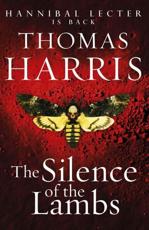
The value of sympathising with a character, of being able to look through their eyes, means that we care about their aims and wishes, even if we think they're wrong. In Silence of the Lambs, Hannibal Lecter is certainly monstrous, but we have moments where we can see through his eyes, care about what he wants: "I've been in this room eight years, Clarice. I know that they will never, ever let me out while I'm alive. What I want is a view. I want a window where I can see a tree, or even water." Lecter hasn't become likeable, but in that moment, we can feel alongside him that intensity, that desperate and so small request. Lecter isn't the main character, though: for most of the book, we're in the company of Clarice.

A story's personal stakes depend on how much we can sympathise with the character, in this sense. Certain genres rely especially heavily on personal stakes: literary fiction (we'll argue about whether that's a genre another time) and romantic fiction especially. The character's desires and aims are what drive these stories; the degree to which we care about their desires and aims is the degree to which we sympathise with them.

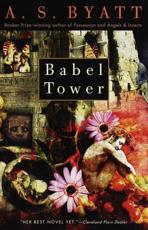
In AS Byatt's tetralogy (The Virgin in the Garden, Still Life, Babel Tower, and A Whistling Woman), Frederica is dissatisfied and frequently annoying – often to those around her and sometimes to the reader as well. She's not especially likeable and the narrative doesn't rely on us liking her. At times, though, it does rely on our sympathising with her, being able to care about her desires and aims as strongly as she does, especiall in Babel Tower: in her silent, hemmed-in struggle to retain her selfhood when she's living with her baby surrounded by her husband's staff; in her fight for custody; in her frustrating and uncompromising refusal to foist all the blame onto him. We couldn't care what happens in those parts of the plot if we didn't care about Frederica's desires and aims in them.
Similarly, In Kazuo Ishiguro's Remains of the Day, Stevens is not "likeable" in the banal sense. You would not want him to "be your friend". He is pompous and verbose from the start (hilariously so). As the novel progresses, he appears increasingly complicit in wrongdoing and morally weak. His inability to show feeling or compassion in even the most severe circumstances is shocking. Yet somehow, it breaks our hearts. We care enough that his father's downfall and his own inability to mourn make us grieve. We yearn for him to let his guard down and find happiness with Miss Kenton, even as we realise he never will. Our grief for him stems from the pathos and poignance of his character, but we do care.

Can you write a novel with a wholly unsympathetic character, with whom the reader feels no shred of fellow feeling?  Ian McEwan did, with Solar. Michael Beard is revolting, selfish, and entirely unlikeable from start to finish. Nothing he does inspires our sympathy or any desire for him to "win". Although we hear the story from his point of view, we never share his point of view. His aims never become our hopes for the narrative. Personally, I found it a difficult and unpleasant read – and I think that's fine. The main character is a difficult, unpleasant person to spend time with. That doesn't make it a bad novel.

Should your characters be sympathetic? I don't believe that there is an answer; it's not binary. I don't believe in rules, in writing: I believe in principles. I compare it to artists learning about art. Artists don't have to work out the principles of perspective from scratch for themselves; they're allowed to learn them. But you can learn how perspective works and then be Picasso. You don't have to obey principles, only understand how they work. Having a "sympathetic character" is a principle, not a rule: we find out what the principle is, we learn the effects on a story of sympathetic and unsympathetic characters, and then we decide what we want to do, understanding what the effects will be.

The Writers' Greenhouse CommunityWant more writing advice? In The Writers' Greenhouse Community, you'll get expert advice on tap, help developing your writing, and the chance to connect with your writing community.

Find out more and join here.

Orientating the Reader
NEW EVERGREEEN COURSE
50%-off Launch Special

Make your characters, events, and flashbacks crystal clear and memorable, so your story's impact works.

GET IT FOR 50% OFF NOW

Writing in Style
FEB–MAR 2027
Online | In person

Set your styles free, and refine and enliven every page.

BOOKINGS NOW OPEN