characters posts
Showing posts with label characters. Show all posts

Writing Skill: They Both Know

They Both Know

When we're writing dialogue, we want it to sound natural – but actual natural speech, in real life, is freighted down with tangents, filler words, dead-end sentences, and an astonishing amount of general burble. If you've ever transcribed real-life conversation, like I had to do at uni in Linguistics, you'll know what I'm talking about! It makes for a dreadful read. So in stories, we want to give the flavour of natural speech, without quite as much clutter. 

We also want to give a sense of the relationship between the characters: dialogue's a dynamic between people. And a sense of their individual points of view, what they know or don't about each other and what's happening, how they feel about it.

This Writing Skill is perfect for practising all of that, and you can use it with your story in progress OR with fresh characters, plus I've got a suggestion for writing groups / buddies. So give yourself the gift of ten minutes' writing time, grab your pen, notebook, and cuppa, and scribble away!

To start with, you need two people who know each other well, and are equals. They can be best friends, partners, siblings, whatever works for you. You can pick two from your story in progress, or whisk up two new characters with this quick character generator.

Something seismic has happened for Character A. How seismic you want to go depends on their age. It could be that they got / lost a job, the person they liked asked them out, they discovered their parent isn't their bio parent, they're moving city, etc.

  • If you're using your story in progress, see if you've got anything like that already to use; if not, just make up a scenario that fits them, as a way to play with their voices – you don't have to put this bit in the actual story.
  • If you're not using a work in progress, you can pick any of my suggestions above or anything else that appeals to you.

For the actual writing, assume that the reader already read the scene when the Seismic Thing happened, so there's no need to recap. Character B doesn't know it's now happened, but does already know all Character A's hopes / fears about the whole situation.

Write their dialogue / any physical reactions (eg whistling, etc) as elliptically as possible. Some possible starting lines could be…

  • "So… I got it."
  • "It's happening."
  • "She asked."
  • "It's time."
  • "They admitted it."

A tells B it's happened, but super elliptically, because B already knows so much. They're both reacting to the news / each other, they're discussing repercussions / next plans, etc. 

Some tips for writing super natural dialogue here:

  • Give as little extra explanation as humanly possible.
  • Sentence fragments are great.
  • Casual language / slang are great.
  • Opaque references are great.

Writing groups / buddies: If you want to do this exercise together, each do your own then swap. See what you can work out about what's happened without the scene before. If you're working in a group, each write down your guesses for everyone before you confer. It's always amazing to see how little exposition readers actually need!

Have fun!

The Writers' Greenhouse CommunityWant more Writing Skills? As a member of The Writers' Greenhouse Community, you'll get a new Writing Skill every week: quick fun activities to develop your writing across plot, character, description, style, genres, and poems.

Plus you'll get expert advice on tap, a friendly supportive writing community, and help sending your writing out.

Find out more and join here.  

Writing Skill: Charming Fool

Charming Fool

A comic character, especially a central character, needs two really important features: they need to be flawed; we also need to like them. We're laughing at them, yes, but also with them, and it's affectionate, not mocking. Think of Bertie Wooster, in the Jeeves books; Sergeant Colon and Nobby Nobbs in the Pratchett books; Bridget Jones in Bridget Jones's Diary; Arthur in John Finnemore's Cabin Pressure series. This matters even if they're not the main character: we don't want our comic bits to slip over into simple nastiness: instead, we stay on the character's side, even when we're doubled over laughing at them.

So if you fancy stretching your comedic skills, to write fully funny fiction or just throw a splash of humour into your stories, this ten-minute Writing Skill will help you shape a perfect character for it. You can use it to whisk up a new character and possible story or use it with your existing story to turn a character comic.

To start off your character, pick something they think they're brilliant at: they think they're a brilliant _____, or they think they're brilliant at _____. Maybe they think they're a brilliant cook,  detective, or chess player. Maybe they think they're brilliant at understanding people, fossil hunting, or mountaineering. Spoiler: they really, really aren't. 

  • If you're inventing a character, start inventing them through this, then give them a full name, age, and a day job, to round them out a bit more in your imagination. 
  • If you're using your own story, pick a character that you'd like to make comic, and add that delusion of brilliance.

Next, based on your character's blithe delusion, pick an event to match. For example, if they think they're a brilliant detective: there's been a high-profile theft from the Ashmolean, which they're determined to solve. Whatever the matching event / challenge is, they'll set at it absolutely brimming with enthusiasm and confidence, to gleeful disaster at every stage.

A couple tips before you go further: first off, remember that we need to like them. They're deluded and confident, but not off-puttingly arrogant. Second, comedy and tragedy are a whisper apart and we want to stay on the side of comedy. That means they absolutely musn't be crushed by their failure: they remain gung-ho throughout, or at least still hugely optimistic about the next time and terribly knowing (deluded) about why this one went so badly. (This principle is called "no-harm", the same principle that slapstick uses.)

Now that you've got your character, their delusion, and the event, you can dive in! You can launch straight into the writing for ten minutes, as they cheerfully set off on their challenge OR spend ten minutes brainstorming / mapping  out the coming twists and disasters. (Some people prefer writing to discover; some prefer to plan. You do what suits you.) When ten minutes is up, you can carry on if you want or stop there, having tried out the new skill and tucked it into your repertoire.

The Writers' Greenhouse CommunityWant more Writing Skills? As a member of The Writers' Greenhouse Community, you'll get a new Writing Skill every week: quick fun activities to develop your writing across plot, character, description, style, genres, and poems.

Plus you'll get expert advice on tap, a friendly supportive writing community, and help sending your writing out.

Find out more and join here.  

Writing Skill: Social Peril

Social Peril

Social peril is a fantastic tension point in stories of all genres and styles of writing: Bridgerton-type society romance and drama, the precise contemporary observations of literary fiction, pacy commercial fiction, historical fiction from last year to the Ice Ages, fantasy and science fiction... Basically, wherever you have a society, you have the opportunity for social peril. 

It’s something that we personally feel as an intense threat, it’s about as bad as threats can get for a human, but it’s hard to explain to others why it would be so bad. It’s hard enough to explain in our own lives, even harder when the society you’re writing about is removed in time, place, or imagination, or simply in sub-culture.
   “But Mu-um, everyone will look at me!”
   “So?” says Mum.
I mean, really: what’s the worst that could happen?

Good question! Exactly the question we, as writers, need to be asking – and answering. So here’s a plotting exercise that’s great for turning internal fears and existential crises into tangible events. It’s also very helpful for creating a richer sense of society in story and for practising story shape. So give yourself the gift of 10 or 20 minutes’ writing time, grab your notebook, pen, and a cuppa, and let’s explore that.

1. Pick a society

Pick your society: Regency high society, the Stone Ages, a ship’s crew, a small English village, a secondary school, the magi in your epic fantasy, a fast-paced law firm, whatever. If you have a story in progress, you can use this to explore it. If you don’t, pick whatever tickles your fancy.

You can do the rest as a 10-minuter or a 20-minuter, as you prefer; just follow the shorter or longer time suggestions.

2. Brainstorm: what are the very real and practical ways someone relies on the group? (3 or 6 mins)

Be as specific as you can, at this point. If you’re using your own story, you’ll be drawing on the specific situtation of one of your characters. If not, let the character details emerge through the brainstorming. For example, if I chose the Stone Ages, a Stone-Age hunter needs others to hunt with, and also needs gatherers for other food, etc. 

There are a lot of ways that we formally and informally rely on each other. Brainstorm as many different things as you can.

3. Brainstorm: What are the very tangible, practical consequences of social disgrace? (3 or 6 mins)

If they’re outcast, whatever that means in your society, what happens? For example, my Stone-Age hunter can only hunt small game if they’re working on their own; they might not have access to a fire, so they’ll be eating it raw, which is more of a health risk and less nutritious; they won’t be getting the gatherers’ food, so will probably start getting scurvy, or might poison themselves gathering the wrong thing; the furs from their small game would rot because they don’t know how to handle those properly... and so on. 

Use the ideas from your first brainstorm and anything else that emerges. As you brainstorm, more details about both the character and the society will start to emerge and sharpen.

4. Turning it into story (rest of the time: 4 or 8 mins)

Now you know exactly what’s the worst that can happen, it’s time to whisk all that together into story, with five questions:

  1. What could cause social disgrace? (eg in my Stone-Age society, that might be stealing food, killing a pregnant animal, etc.)
  2. Who specifically would turn against them? This needs to be the majority, but think of some specific influential people, to show it happening. (If you’re making this all up as you go, you can just jot bare details, eg “tribe leader”.)
  3. How might you stage out the disastrous consequences? You don’t want all the bad things to happen at once, so arrange them in order of what happens. (You can just number your brainstorm in order of size of disaster / logical order)
  4. Who might stay on their side, even a bit? This is definitely a minority, and they might not be able to speak out, but they do care. Think of one to three specific individuals.
  5. What could restore their name? 

Et voilĂ ! Social peril, that so-human but so amorphous fear, is turned into stuff that happens. Which is exactly what we want to do, as storytellers.

The Writers' Greenhouse CommunityWant more Writing Skills? As a member of The Writers' Greenhouse Community, you'll get a new Writing Skill every week: quick fun activities to develop your writing across plot, character, description, style, genres, and poems.

Plus you'll get expert advice on tap, a friendly supportive writing community, and help sending your writing out.

Find out more and join here.  

Writing Skill: Bringing It All to Life

Description Into Action

The four key elements that bring a story to life, as something readers can lose themselves in and feel like they're living inside, are rich characterisation, purposeful description, a compelling plot, and live action on the page, telling the story through scenes, not explanation / exposition / etc. All of those are things we can work on individually, as we develop and draft our stories. In the final draft, they all weave together – and that's what you'll play with in this Writing Skill.

You can keep this to ten minutes, as a quick exercise to stretch those skills, or spend longer on it, as you prefer. And you can use it as a starting point for invention, if you don't have a story on the go, or try it with an existing story. Whatever you choose, grab yourself a cuppa, a notebook and pen if you can write by hand, and settle in for some fun!

Start with character description 

We're using character to start with, here, so first off we want a paragraph of description about a character: their hairstyle, accessories, clothes, habitual expression, etc. Feel free to include their habits as well. As much as possible, we want things they choose about themselves: that tells us something about their character, whereas their height / eye colour / natural hair colour / etc gives us nothing about their personality.

Here's an example from my freewriting:

He keeps a wool hat pushed down on his head in all weathers, he shuffles and slouches along in a big old coat that hangs down to his hips, and he sees the world a different shape to most folk.
    When that oversized coat came down to his ankles, its capacious pockets held the purses he lifted. Now it holds scraps of paper and pencil stubs, and if you emptied them all out and lined up the phrases, why, it would read just like that poetry they make so much of at the uni.
 

If you're using this skill as your starting point

First off, write that paragraph of description about a character, making up the details as you go along, focusing on the things they choose about themselves. Allow yourself to invent freely and wildly, with whatever comes to mind. If you want a starting point to invent your character, use this lovely quick cameo character generator. Spend five minutes on this if you want to keep it to a ten-minuter.

If you're using your own story

Flip through your writing for any static descriptions of your characters. If you have any, use one of those. If you have no static descriptions, check if you have any description at all of your characters: do you give the reader any visual hooks for them? If not, write a paragraph of how you imagine one of your characters, focusing on the things they choose about themselves. Spend five minutes on this if you want to keep it to a ten-minuter.

Turning the description into action

That paragraph gives us description and characterisation woven together already. Now we want to plait that into action, as part of a compelling plot. Quickly jot down:

  • Where is your character?
  • What are they doing and why does it matter? 

If you're using this Writing Skill as a starting point, you can just make those up. If you want some extra inspiration, try this quick plot generator and just click on "Setting" and "Situation". If you're using your existing story, look for the first scene that really features that character.

Then, for the rest of the time you have available, rewrite the paragraph, only mentioning what the character does with all those aspects of their appearance. Something can only be mentioned if they interact with it to some purpose (so not idly lifting and putting stuff back down).

Here's an example of my own reworking:

Description through action

  • Where is my character? On a rooftop, at night.
  • What are they doing and why does it matter? Spying / eavesdropping on a meeting for the head of the guard.

The next night, he had a new spot: perched on a narrow roof ledge above the curtained window, the bone flag tickling his very toes. He watched the moon scud through the clouds with a faraway gaze as if he were only trying to see the sailor who poles it across the skies. But he pushed his habitual woolly hat up above his ears and strained for three things: how many voices were in the room; whether any could be identified; and whether their words could be discerned.
    In time, he reached into his raggedy oversized coat and pulled out a scrap of paper, an old label from one of Culpeper’s bottles. It bore the solemn injunction to ‘inhale thrice daily but not to drink thereof’. He turned it over, sucked his pencil stub thoughtfully, and wrote by moonlight, ‘A hand of voices turns to fists.‘ He pushed the paper back into his pocket and continued to stare at the moon. The head of the guard would understand its meaning.

All of the detail comes to life, when it's being used as part of the action. And how much more fun, to read one of his mysterious notes, than just to be told that they read like university-admired poetry?! As you can see, I didn't fit in his childhood history: that's fine, we can't ram everything into one scene. We dripfeed info across a story.

So now, decide where your character is, what they're doing, and why it matters. Then write them in that place, doing that thing, weaving in as much of the descriptive detail as you can.

Have fun with it!

The Writers' Greenhouse CommunityWant more Writing Skills? As a member of The Writers' Greenhouse Community, you'll get a new Writing Skill every week: quick fun activities to develop your writing across plot, character, description, style, genres, and poems.

Plus you'll get expert advice on tap, a friendly supportive writing community, and help sending your writing out.

Find out more and join here.  

Writing Skill: Unjudge

Unjudge

Creating and getting to know our characters is one of the most joyous parts of writing. It's also an area where we easily slip into habits or rut, without realising. This Writing Skill, UNJUDGE, is a lovely character-creation tool for developing more unexpected characters in a way that ducks around our habitual thinking. So give yourself the gift of 10–20 minutes writing time, grab your notebook, pen, and a cuppa, and curl up somewhere comfy.

For this skill, you'll use the site This Person Does Not Exist. It's an AI-generator that creates wholly convincing photos of people who – like it says – don't exist. Though they really, really look like they do! Each time you press refresh a completely new image is created. So the first thing you're going to do is choose your character. Remember, refresh means it creates a new image: you can't go back to a previous one! So I suggest you allow yourself a maximum of 3 "refreshes", to choose your character, and make sure you screengrab each one, cos once it's gone, that's it.

Important note for screengrabbing on a computer: If you right-click and say "copy image", it doesn't copy the image you're looking at! It generates a new one and copies that. To save the picture you're looking at, use the Prt Sc (print-screen) button and then paste it into a document. You can also use a screen-snip tool.

Part One

Once you've chosen your character, study their face and spend half your time (five minutes, if you want to keep this a ten-minuter) making up what they're like: their personality, their job, their hobbies, their relationships, whatever comes to mind. Go completely with whatever comes to mind; don't worry if it seems an obvious choice, a bit cliched, even a bit judgy. It'll be fine, trust me.

I suggest you don't scroll down to Part Two until you've done that bit. 

Collage of characters from Renaissance drawings and a mannequin

Part Two

Now that you've got your character fully described, generate ONE more "photograph" by refreshing the site. That's the person you've actually been inventing! Everything you've just made up gets reassigned to the new face. Make sure you screengrab your new character, then spend a couple minutes more making up additional details. The only catch is: you can't change any of the details you've already made up.

When we're working on our own from a photo, it's often easy to slip into rather judgy and prejudiced character creation. We can fight like crazy against our own biases, but that often means we're spending most of our creative energy on batting away the biased choices, or making the exact opposite choice instead. By doing a switcheroo with the photo instead, none of those judgements came from the person's face, and the new identity is often an unexpected fit for our inventions. The disjuncture also leads to fresh ideas.


The Writers' Greenhouse CommunityWant more Writing Skills? As a member of The Writers' Greenhouse Community, you'll get a new Writing Skill every week: quick fun activities to develop your writing across plot, character, description, style, genres, and poems.

Plus you'll get expert advice on tap, a friendly supportive writing community, and help sending your writing out.

Find out more and join here.  

The Characters that Let Your Stories Fly

The Characters That Let Your Stories Fly

When I started writing more keenly, I thought what I needed most was to plot better. I worked on that, hard, and my stories grew wings… but somehow they didn’t take flight. They felt like planes circling the airport, even with their immaculate flight plans.

What I actually needed to learn took me much longer, because I didn’t realise I needed that: to write characters unlike myself. Not just the wrong ‘uns, all of them. Especially the main characters.

Again and again, in my teaching, I’ve seen other writers hobbled by the same thing. It’s not a glaring lack, like plot, but it stops stories flying. And you don’t know why – because our selves are a blind spot to us. How we are, that’s just normal, right? But other people are different. And until all our characters can be too, including our main characters, we’re clipping our stories’ wings.

It is a blind spot, because our selves are our normal. So before we launch into why it's important, here are two quick tests of whether you’re stuck in characters like you:

  • The Three-Traits Test: Can you (and your writing group / buddy if you have one) quickly and easily write three separate personality traits for them? If you can’t, they’re not fully characterised, and likely a diluted version of you.
  • The Reaction Test: When your character reacts to something big (a heartbreak, discovery, thrill, frustration), can you say why they specifically react like that? Or is their reaction just “normal” to you? Because them being just normal might be them being just you.

If, in your writing so far, your characters are mostly you, especially the main characters, you have a wealth of discovery and joy ahead of you. Because this is what characters unlike you – again, especially the main characters – will give you.

You get more vivid characters

We don’t see ourselves as clearly as we see other people. Like fish not noticing water, we live inside our own traits without realising how much is specific to us, rather than standard-issue human, so we don’t describe those characters well. Without that clarity, our characters-like-us stay vague, undifferentiated. Worse still, to make the character “not us”, we often strip away what is unique and interesting, leaving the character not only blurry but bland. When your character’s not you, they become crisply drawn with distinct personality.

You vary your characters across stories

Even if your stories are wildly different, having much the same person at the centre of each gives them a sameyness. That gets boring for the readership you want to grow and boring for you as a writer. Different central characters bring fresh sparkle and variety to both your stories and the writing process.

You vary your cast within stories

The disjuncture between different types of people is a rich narrative seam. It increases your story’s depth, intensifies the point of view, and offers wonderful narrative tension as your disparate characters connect and clash. For that to work, all your characters need to be different, not just the “villains” of the piece. That also means learning to see the value in traits very different from your own.

You get wider scope for stories

As your characters open up in variety, so too do your storytelling possibilities. There are stories I’ll never be able to tell about a Meganesque character, even if I dress her up as an astronaut, a religious peasant, or a cursed child in a desert land. As soon as it’s not me, though, I can write about a Machiavellian commitment to social change, a status-driven ambition, a rigid adherence to minutiae, or a stone-cold indifference to others’ opinions, and how those traits play out to the good. When your characters aren’t you, your stories open up in exciting new ways.

You get more consistent characters

Once a character isn’t you, they start shaping their story themselves, because they have a distinct personality, which you can identify, and they act according to it. When your characters are still “basically you” and you’re trying to write a specific story, the events and character are often at odds. A Meganesque character doesn’t make sense as an astronaut: yes, she has the maths skills; sure, I can give her the fitness levels; but an astronaut needs the easy equanimity and (to me) near-bland resilience she simply doesn’t have. That clash will show in the writing. When your characters aren’t you, they stay in character – their character, not yours.

It’s easier to write about autobiographical events

The big things that have happened to you, which you want to approach in fiction or auto-fiction: surely, given they happened to you, perhaps even shaped you, this is where the character should be most like you? Counterintuitively, no. To make fiction about that, or even the thinly veiled memoir that is auto-fiction, you need artistic distance. That’s hard to get about something you feel so vulnerable, pained, or raging about. Putting clear blue water between you and the character – making them distinctly not you, or unlike you, in a few significant ways – helps hugely. It lets you write about it in a way that does draw on your experience, with all the insight that gives, and also with the objectivity that makes it the stuff of story.

You get to step through the magic doorway, regardless

There are times when writing seems impossible: when you’re so stressed it feels like you can’t breathe; when you’re crying so hard you can’t see the words. If you can step through the magic doorway into your story’s world, it’s transformative. You enter a flow state and your breathing returns to normal. Your tears dry and you rediscover a part of your life that doesn’t hurt. I’ve done both, but it’s only ever been possible when my characters weren’t basically versions of me. Having characters that aren’t you lets you step into your story world, whatever’s happening with you.

*

All your characters will always, in some way, be you: after all, you’re writing them. But instead of having mini-yous or bonsaied-yous enact every story, you get to act out being all those different people. Your stories’ freedom becomes your freedom.

And you do have the skills to do it. You live in a world brimming with people who’re very different to you. You socialise with them, work with them, and make a dozen accurate predications a day on how they’ll behave, without even noticing. That’s part of being human. That’s the same skill you can bring to your writing, to create characters unlike you and set your stories free.

Why Can't They Remember?!


Why Can't They Remember?! Text overlays a collage of memorabilia in pale blue: cameo brooches, old newspapers, a playing card, etc.

It’s one of the most maddening things. You excitedly present the next instalment of your story to your writing group, your writing buddy, your friend who’s eagerly reading alongside your writing. You can’t wait for their reaction: their shock at your Dramatic Reveal, their thrill at the plot twist, their emotion at the most moving thing you’ve ever written…

Instead, they’re drawing a blank. They can’t remember who the character even is or confuse them with someone completely different. They’ve forgotten that plot thread, so your carefully constructed Dramatic Reveal lands with all the impact of a wet dish cloth. They’re asking “Is this about X character?” when it’s clearly five hundred years before: for crying out loud, it even says so on the page, right there, in the middle of that paragraph, see? “Five hundred years”. And that character: there was a whole scene about her, in chapter four! And that Dramatic Reveal: you have your notes from before; one of them spotted your foreshadowing and guessed what was coming! Are they even bothering to read your writing? How can they not remember?!

Sometimes, in writing group, we’ve discussed whether it’s because we’re not reading like “real” readers. “Real” readers don’t have to wait a week or a fortnight for the next instalment; they can just turn the page. “Real” readers aren’t following the story over a couple of years; they might finish the book in a month, a week, or even a single day of holiday.

It’s true, we’re not reading like “real” readers. We’re reading with our pens out, underling favourite bits, spotting repetitions, scribbling notes in the margin. We’re going back over the whole section in group, discussing it at length. Sometimes we’re reading the same scene again, rewritten with its previous issues ironed out. We’re paying incredibly close attention.

And those “real” readers, with the complete book in their hand? They’re reading in the bath. On the bus or the tube. In bed with their eyes drooping. On the sofa, curled up with a head full of flu. They’re listening while they chop vegetables for dinner or while they navigate the traffic on their way to and from work.

Every time, the group comes to the same conclusion: the gaps in time are more than balanced out by the incredibly close attention we’re paying to each other’s work. So if we can’t remember those details, the “real” readers don’t stand a snowball’s chance in hell.

Of course it’s frustrating and disappointing. Of course we’re tempted to pull up the exact passages that our writing buddies seem to have not even read or had wiped from their minds. But if they can’t remember, that’s a problem in the writing, which needs fixing in the writing.

As a teacher, I have a mantra: if a student doesn’t understand, that’s my fault, not theirs. It’s literally my job to help them understand. The same is true for us as writers: if readers don’t remember, that’s on us and it’s our job to help them. If two people in my group remember and one doesn’t, it still needs fixing. That’s a third of my readers confused, so why not make it clearer?

There are lots of things we want our readers to be wondering about. What’s going to happen next. If X is a bad ’un or is going to turn out trustworthy. Whether Y and Z will end up together. If that’s a clue or a red herring. We want to save the reader’s headspace for all of that, not squander it with them trying to work out the basics of who characters are, what happened before, and when even is this.

Frustrating as it may be to encounter the problem, fixing it is blissfully rewarding. It’s not like ironing a bug out of some code or correcting a spelling error, a dutiful necessary task. It is rich with discovery and delight. As you go back to make those characters more memorable and find ways to sneak in reminders, they leap to fuller life than they ever did before. As you seed memory-hooks into that past scene and weave them in to the new one, both turn thick with vivid detail and new story possibilities. When the phrase “five hundred years before” isn’t registering and you make everything look, feel, smell like it’s five hundred years ago, you discover astonishing new depths to draw on.

And even if you had to bite your tongue so hard it hurt, when you were getting feedback, now you can loosen it to thank them – because by flagging up the problem for you, they’ve helped you discover all this.

Then the next time you’re writing, you remember to create and seed those details in from the start, which embeds them even deeper in the story and opens up richer story possibilities. And then, when you’re asking the group if they remember X, they’re saying “Of course, how could I forget her? She’s the one…” and “Yes, absolutely! That was the bit where…”

Writing Skill: The Pretence


Cross Purposes

In the run-up to the Story Elements course, I'm posting a trio of Writing Skills, one a week, to get you exploring the different ingredients that go into story creation: premisecharactersplacetimeplot layeringtension & stakesplot point of viewbeginningsthemes & symbolssubplotsdetail & dialogueendings.

This week's Writing Skill is THE PRETENCE, to play with the first four topics of the course: premise, characters, place, and time. You have two characters, each of whom is pretending to be something they're not. They might be pretending they have a different job, status, class, nationality... whatever you fancy. I suggest you choose a different type of thing for each character. And both characters are trying to impress the other. For example, the CEO of a big finance company is pretending to be the janitor, to seem more practical and down to earth, and the new hire is pretending to be French, for reasons I haven't quite yet worked out, but which might emerge in the writing. NB: The reader already knows the truth about both characters, so we know they're lying, and we're giggling away and half eating our hands with the tension.

To start, spend a couple of minutes deciding what each is lying about, being reasonably specific. For example, if they're lying about their job, what's their actual job? What are they pretending is their job?

In choosing their lies, you'll also be generating the setting for the scene (the place and time). For example, with my CEO of a big finance company, I've immediately got a setting of the City of London, a towering glass building, a corporate environment, and I can keep that present day or jump back a bit in time. How about 2009, when bankers were deeply unpopular? That would give my CEO added motivation to hide their real identity!

You don't have to stick to your own lived timeline either: one of the characters could be a pyramid builder, lying about being the pharoah, or indeed the pharoah, lying about being a pyramid builder.

Once you've got your two characters through their lies, and the setting, spend the rest of the time (about 8 mins if you're doing a ten-minuter) writing their interaction. You can stick to dialogue mostly, throwing in action/description where it's relevant, as this is very much first-draft stuff. And play it for laughs!

Why this skill?

This Skill gives you a swift, nifty way in to the first four elements of stories: premise, characters, place, and time. I've given you the premise: two characters lying to each other. That's enough to start you off writing, and how you develop it is what will make it unique. Your characters are created through their lies: an unusual start to character development, but a fun one to loosen up your powers of invention, and it instantly creates character complexity. And those lies in turn give you your setting, your place and time, which immediately makes it easier to start writing and suggests new avenues of story and character possibility – such as my CEO's lie being in the context of the global economic crisis.

These four are the first four elements we explore in the Story Elements course: live online classes OR in person in Oxford, your choice. Read more about the course and heaps of reviews, and book your place here.

Writing Skill: Voice Trait


Voice Trait

This Writing Skill is Voice Trait, a lovely way to play with character voice. A character's voice comes from a wide range of things: their age, dialect, education, class, region, personality, etc. It's often easiest to go for the extremes – the "eeh bah gum, t'were a reet mess" or "I say, old chap, that's frightfully out of line", but that can also end up creating caricatures, rather than characters. Also, people of the same age / dialect / education / class / region still have their own distinct voices. So for this skill, we're going to focus purely on character traits. I suggest that for the other voice indicators (age / dialect / education / class / region) you stick to your own, or to the set you're most familiar with, so you can really concentrate on how their personality traits shape their voice.

For personality traits, grab the first choice from this handy rangen. You can use all three, or whichever feels most useful to you. I got "manipulative, inspirational and industrious". I think I could have a lot of fun with "inspirational" – which I'm reading in the sense of those endless online inspo memes, so my interpretation's probably quite influenced by the word "manipulative" as well!

Then for what to write about, we're going to keep this as plain as possible, so you can really concentrate on the voice itself. The character is explaining, in detail, one of these three things: 

  • how to make a cup of tea
  • how to change a tyre
  • how to sew on a button

Choose whichever suits you best. I can already hear my character exclaiming "You've got this!" and "There are no mistakes, only opportunities to learn!" and "I like to imagine there's a sunset seascape behind my words, it gives me a lot more confidence to really own my truth." (Oops, I think I just punched them.)


The Writers' Greenhouse CommunityWant more Writing Skills? As a member of The Writers' Greenhouse Community, you'll get a new Writing Skill every week: quick fun activities to develop your writing across plot, character, description, style, genres, and poems.

Plus you'll get expert advice on tap, a friendly supportive writing community, and help sending your writing out.

Find out more and join here.  

Writing skill: Cosy Vignettes


Cosy Vignettes

This week's Writing Skill is Cosy Vignettes, exploring an aspect of detective fiction. Specifically, "cosy" detective fiction. In crime / detective fiction, "cosy" doesn't mean cottagey / snug /tea-cosy; it means the possible suspects are restricted to a very small group. Classic scenarios are that everyone's in one house together on a rainy night, or on an island, or on the same train. That said, they do tend to be cosier in the ordinary sense: the violence is usually off-stage and the story focuses on solving the crime, like a puzzle, rather than the gruesome crime itself. Most of Agatha Christie's stuff is cosies; so is Death in Paradise.

To explore this, you're going to have six characters: one murder victim and five possible suspects. (Your detective / amateur sleuth can waltz in later.) And for each suspect, you're going to write a character vignette, answering four key questions:

  • What was their relationship to the murder victim?
  • Why would they have motivation to kill them? (Everyone in the cosy needs an apparent motive, to keep them a suspect.)
  • What are they lying about? (Ask Dr House: everyone lies!)
  • What makes them different, as a character, from the other suspects? Think of a pronounced character trait and a strong visual hook.

If you'd like to keep it to ten minutes, I suggest you spend two minutes on each suspect. (Of course if you want to do 20 mins, you could make that four minutes each.) And to get your cast of characters, jump over to this quick character generator and tell it to generate six characters. The first is your murder victim; the other five are your suspects. Feel free to ignore anything in their profile that doesn't fit the genre, eg references to outer space, unicorns, superpowers, etc, and to change anything you like: the generator is just to give you a starting point.

Have fun!


The Writers' Greenhouse CommunityWant more Writing Skills? As a member of The Writers' Greenhouse Community, you'll get a new Writing Skill every week: quick fun activities to develop your writing across plot, character, description, style, genres, and poems.

Plus you'll get expert advice on tap, a friendly supportive writing community, and help sending your writing out.

Find out more and join here.  

This is the time that is no time... Dark Matters


Saggitarius as a centaur
I’m baffled, too, why they accredit Me with such a cheerful personality.  Even the pagans, who at least knew when I rule.  I come between Samhain and Yule.  The time that is no time.  Between the last harvest and the first planting; the barren time.  Between the sun’s slow, agonising death and its much-vaunted rebirth.  (You’d have thought that would be a hint.)  The wheel of the year always keeps turning, and between Yule and Samhain it stops.  And not but: that’s the nature of paradox.  Burn your mind with contradiction like a brand.  Don’t think you can smooth it over with a pat explanation, or it wouldn’t be paradox.  Don’t think you can sit and contemplate it like a fat man under a tree and get around it that way.  It has to hurt: it’s two ideas at war. – "Dark Matters" by Megan Kerr, Astrologica

The finished story, novel, poetry collection, always seems a smooth and perfect thing, as if it just emerged as its full self in steady loops of the pen. The process behind writing is a wilder and more chaotic thing. When writers say in interviews, "So the idea just came, and next thing I knew, I'd written 80,000 words" I want to throw things at the radio: they're lying, they know they're lying, I know they're lying, what I don't know is why they're lying. Why pretend the process never happened? Why kick ladders and make other writers feel like they ought to be able to "start at the beginning, write to the end, and stop" like some Alice in Wonderland fantasy?

Of course I want to share the process: I'm a teacher. But I also think process is a magical, intriguing, and endlessly fascinating thing, and always changes for every story. I originally wrote the post below in 2014, a year after I'd finished the story in question, to share that process – and, ever the teacher, to offer some fun writing springboards for you to enjoy your own process of creating and discovery. Process is messy: embrace it.

The little blue-green clock of the world has spun back to the time that is no time, and my walks, my thoughts about VATMOSS, and my playlists are reminding me of the short story I wrote last year about the time that is no time – so I thought share the process of it as a collage of music, pictures, research, etc (including its playlist – all my writing projects end up with a playlist), and offer up the character-creation technique I used.

Recommended listening while you read: the full playlist or This Night – Black Lab

Inspiration: The brief

Astrologica is a short-story anthology based around the twelve signs of the Zodiac, edited by Allen Ashley (who always gives great briefs). I don't believe in astrology (nor does my heroine), but I wanted to write about Saggitarius, for several reasons:
I’m a Sagittarius myself and the sign’s full of contradictions, which fascinates me.  It’s described as happy-go-lucky – but extremely ambitious: that creates an instant war within the character. The sign’s personality and time of year also conflict: 23 November to 21 December is the heart of what the pagans call “the time that is no time”, a dead time before the sun’s rebirth, leading right up to the cusp of Yule and Christmas, but not quite part of it. I wanted to work out that contradiction between this cheerful, ambitious, creative personality and this leaden, barren time of year. The symbolism of the centaur himself is also contradictory, a battle between body and mind: he’s simultaneously very intellectual and very physical and sensual, a human head and an animal body.
     As I wrote, I found a fourth contradiction. The relentless ambition implies a strong internal locus of control – that is, you believe that what happens is down to you, your achievement, your responsibility, your fault. Believing in astrology, though, says you have no free will: it is fate. A Sagittarian character might reject astrology, but what about Sagittarius himself?
     The challenge then was to create a character and a story that was all those things, and marry the paradoxes. (interview with Alchemy Press)
Despite not believing in astrology, I do recognise myself in the descriptions of Saggitarius in a way I absolutely don't in the other signs – especially in that relentless optimism. With VATMOSS threatening my business, yes, I cried and panicked for a few days, and found the usual earworm coming back: "I get knocked down! But I get up again!..." and thinking in the terms I used to describe Kate Fletcher:
She’s not the kind of woman who weeps.  She’s the kind who scrubs tears off with the backs of her hands and fights on, who gets up every time she’s knocked down, a Chumbawumba chick, motivation of stampeding buffaloes, focus of an arrow held on a taut bow and aimed at the stars… But if she’s going to do emotion, she thinks wryly, it’s going to be big – and already that thought is a lifting-out.  She’s getting up again.  Fight on, she thinks, through unrelenting hours.
I don't think I'm quite as indomitable as her, but perhaps that's part of what we do, in stories and characters: part reflection, part exaggeration, creating a world more powerful and resonant than the one we live in, and that in turn reflects back and makes this world a more powerful, resonant place to be.

Playlist

The story's playlist wasn't the cheerful slap-in-the-face of Chumbawumba, though; it was altogether darker and more eerie, more "DeVotchKa and Wagner: she has a thing for Teutonic grandeur, Russian pessimism." You can listen to the whole thing here. I played the songs again, and again, and again; evening after evening, staring into the dark corners of the living room or lying in the bath, fathoming out a story that for once I couldn't map out and needed to write through blankness and darkness to find. Again and again, I kept coming back to the contradictions, which I couldn't resolve, and somehow I knew it was critical not to resolve them, not to smooth it over into paradox: it had to hurt. It had to be two ideas at war.

Pctures

Much of the time I listened to the playlist while staring at a particular photo album on my computer, scribbling down thoughts that I thought probably wouldn't go into the story, but might... and many, in some form, did.

Slabs of concrete, like suspended rectangles of gravel: as she climbs those steps again each day, into the Physics faculty, she tramples over memories.  She turns her face away from the view down Keble Road towards University Parks, where bright berries hold their frozen drops.

The dogwood is already bare: stark, fire-red branches in a grey whipped world.  The October leaves had their brilliance, but the rains plastered them into the mud.  A few trees fly defiant flags, unseen from beneath umbrellas.

Someone walking along the canal has had a fight with a bouquet – or an accident, or some kind of wild rite of winter.

“All just running alongside me – as if they’d been waiting, like some kind of equestrian escort –” and within her words, the horses and their mystery catch fire, and burn away in conversation.  They’re horses, after all.

Research

I also did obscene amounts of research, especially given that it's a short story (albeit a long short). I stuffed my Evernote and my head and my satchel with research on involuntary autobiographical memory, the scientific absence of free will, the illusion of the self... "You think you’re choosing consciously, but you’re not.  It’s already a done thing.” (Much gratitude to Christian Jarrett of the BPS Research Digest, who always gives good links.) I read a great deal on dark matter and black holes, and the relationship between them. I learnt about two galaxies which NASA had just discovered must be enveloped in dark matter, the position of the pulsar star PSR J1748-2446ad, and WIMPS. I checked the exact weather in 2012, the exact astronomic events visible in Oxford, and the astrological meanings attributed to them. Thanks to the kindness of the Oxford Physics Department, I even got to go into their observatory and have a look at the telescope, while one of the post-docs took time off his research to show me around and answer my questions:


(People are incredibly kind and welcoming to writers. You think you'll never be allowed in to see stuff, but if you just tell them that you're writing about it, they're invariably so generous and helpful.)

And little by little, draft by draft, I wrangled far too much research and far too many contradictions into a story that worked. I also discovered some interesting things about characterisation:

Discoveries

First, "personality systems" like star signs are more useful than I'd thought. I'd dipped into them before, just for fun, but never followed a particular type through to that degree. Sticking to it completely meant I had to keep the contradictions – contradictions I might not have wrapped into the character myself – and make sense of them without negating them. I don't recommend you give every character a star-sign and stick to it religiously, but as an exercise, it's fascinating.

Exercise: Create a star character
Pick a star sign and look up its traits – this is my favourite website for that. Create a character incorporating all those traits: use them all and keep all the contradictions. Use the character's contradictions and flaws to develop their story.

Second, your characters can be the same. Received wisdom is to vary your cast, and much of the time that is a good idea. That said, having two characters who're very alike can work incredibly well: their very similarities can make them clash violently, be each other's downfall, and heighten the traits you're exploring.

If she’d ever imagined meeting a god, which she hasn’t much, she’d have expected things like reverence, transcendence, numinous awe.  Not music, sex, and good conversation.
     “Ah, but you’re one of Mine,” says Sagittarius.  “We get it, the dark and the ferocity and the fun.”
     “Still – you’re more fun than I would’ve thought.”
     “You of all people should know better than that.”
     And she realises.  How she laughs and chatters in company, always off on the next anecdote, burning with ideas – and how she is at home, alone with her aspirations and her thoughts.  How she’ll split her sides laughing with a still-unswallowed mouthful of wine, but the moment pain strikes, she’ll vanish – sociable means never doing the unsociable.  No-one wants to see the tears and the gloomy face, so the sociable reputation is never stained and only the moments alone are pained.  What is He like then, when He’s alone?  What thoughts cripple and blank His flaming mind?
     And the burning arrow.  That, too, is alone.  The outsiders, which is everyone, see the aspiration and the hope and the wild aiming, but never the cost.  And never the secret coal at the heart of it, the private intense desire, the kinetic potential that burns your soul –
     It burns and it hurts, but there has to be something, always.  No Sagittarian could live without some shining unreachable goal, what else is worth living for?  Except, she thinks, except –, but all that was torn away from her, all that has no place in the barren time which is no time, all that burns up in the fires of aspiration.  At least she knows what drove her to destruction now: a force as vast and impersonal as gravity.  Dark matter, bending her to its will as it bends the light.
     “What do you want?” she asks.
     “I’m a god,” He says.  “What’s left to want?”

Exercise: like meets like
What if your star character met someone with the same traits? How would the second character differ as a person? How would they relate / collide / clash? What would happen, between them?


You can read an interview with me about "Dark Matters" here, a review of Astrologica here, and buy it here. You can also read more about the messy and all-important joy of process here: The joy is in the doing.

When your characters all look like you


It's an easy mistake to make: creating characters too much like you. As you develop in writing, you learn to build a more various cast and include some personality contrast. We're still writing from within our own experience, though, and unless we notice that our experience isn't universal, we just keep on replicating it. I only discovered recently that most people don't see music - so I have to comb back through my novel, checking that my characters aren't all synaesthetic. I'd just assumed that everyone sees the world as I do, including the music. An issue like that can just be idiosyncratic. When it comes to the experience and assumptions of our various identity positions, though, that matters more. We think we're writing a varied cast, but actually every character looks like us.

Should your characters be sympathetic?


Should Your Character Be Sympathetic?

Take a group of writers, throw in the question "Should characters be sympathetic?", and sit back to enjoy the argument. (You can usually guarantee the argument by including at least one literary author and at least one commissioning editor.)

In the Characters session on the Story Elements course, we create characters with a bunch of prompts and then check the emerging characters against three criteria. Is the character complex? Real people are contradictory, have mixed feelings, think one thing and do another, behave out-of-character, and have different sides to them. While we're inventing characters, we don't want to make them too smoothed-over and consistent, or they'll end up one-dimensional. Is the character interesting? Most engaging characters have something unusual, interesting, or larger than life about them. Even the most humdrum person is unique and distinctive to themselves. The most contentious question, though, is this: is the character sympathetic? That question comes with a massive caveat

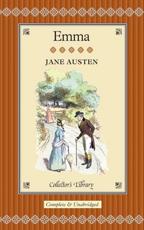
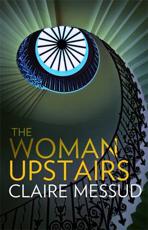
Whether characters should be sympathetic has always been a matter for argument. Jane Austen wrote about Emma, "I am going to take a heroine whom no one but myself will much like," and expected that the book's popularity would suffer as a result. Women writers and characters seem to get more flak, for not being likeable: Claire Messud, author of The Woman Upstairs, was told by her interviewer, "I wouldn’t want to be friends with Nora, would you?" and Messud rightly flipped:
For heaven’s sake, what kind of question is that? Would you want to be friends with Mickey Sabbath? Saleem Sinai? Hamlet? Krapp? Oedipus? Oscar Wao? Antigone? Raskolnikov? Any of the characters in The Corrections? Any of the characters in Infinite Jest? Any of the characters in anything Pynchon has ever written? Or Martin Amis? Or Orhan Pamuk? Or Alice Munro, for that matter? If you’re reading to find friends, you’re in deep trouble. We read to find life, in all its possibilities. The relevant question isn’t ‘Is this a potential friend for me?’ but ‘Is this character alive?’
Somewhere along the line, sympathetic and likeable have become confused and we need to separate them out again.  Sympathetic means someone you can sympathise with, not the French sympathique (which does mean likeable). So really, what we're asking is "Can we sympathise with your character? What would make us like them more or understand them more? They don’t have to be 'nice', but we want to be able to get behind their eyes." That distinction – like them more or understand them more – is important. One student offered the alternative she uses: Can I respect this character? That question works for the strengths and weaknesses of the character she's currently creating, but wouldn't apply to every character. Even returning to the original meaning of a "sympathetic" character doesn't mean every main character should be sympathetic.

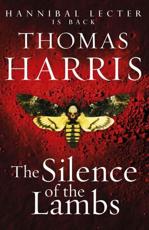
The value of sympathising with a character, of being able to look through their eyes, means that we care about their aims and wishes, even if we think they're wrong. In Silence of the Lambs, Hannibal Lecter is certainly monstrous, but we have moments where we can see through his eyes, care about what he wants: "I've been in this room eight years, Clarice. I know that they will never, ever let me out while I'm alive. What I want is a view. I want a window where I can see a tree, or even water." Lecter hasn't become likeable, but in that moment, we can feel alongside him that intensity, that desperate and so small request. Lecter isn't the main character, though: for most of the book, we're in the company of Clarice.

A story's personal stakes depend on how much we can sympathise with the character, in this sense. Certain genres rely especially heavily on personal stakes: literary fiction (we'll argue about whether that's a genre another time) and romantic fiction especially. The character's desires and aims are what drive these stories; the degree to which we care about their desires and aims is the degree to which we sympathise with them.

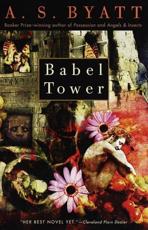
In AS Byatt's tetralogy (The Virgin in the Garden, Still Life, Babel Tower, and A Whistling Woman), Frederica is dissatisfied and frequently annoying – often to those around her and sometimes to the reader as well. She's not especially likeable and the narrative doesn't rely on us liking her. At times, though, it does rely on our sympathising with her, being able to care about her desires and aims as strongly as she does, especiall in Babel Tower: in her silent, hemmed-in struggle to retain her selfhood when she's living with her baby surrounded by her husband's staff; in her fight for custody; in her frustrating and uncompromising refusal to foist all the blame onto him. We couldn't care what happens in those parts of the plot if we didn't care about Frederica's desires and aims in them.
Similarly, In Kazuo Ishiguro's Remains of the Day, Stevens is not "likeable" in the banal sense. You would not want him to "be your friend". He is pompous and verbose from the start (hilariously so). As the novel progresses, he appears increasingly complicit in wrongdoing and morally weak. His inability to show feeling or compassion in even the most severe circumstances is shocking. Yet somehow, it breaks our hearts. We care enough that his father's downfall and his own inability to mourn make us grieve. We yearn for him to let his guard down and find happiness with Miss Kenton, even as we realise he never will. Our grief for him stems from the pathos and poignance of his character, but we do care.

Can you write a novel with a wholly unsympathetic character, with whom the reader feels no shred of fellow feeling?  Ian McEwan did, with Solar. Michael Beard is revolting, selfish, and entirely unlikeable from start to finish. Nothing he does inspires our sympathy or any desire for him to "win". Although we hear the story from his point of view, we never share his point of view. His aims never become our hopes for the narrative. Personally, I found it a difficult and unpleasant read – and I think that's fine. The main character is a difficult, unpleasant person to spend time with. That doesn't make it a bad novel.

Should your characters be sympathetic? I don't believe that there is an answer; it's not binary. I don't believe in rules, in writing: I believe in principles. I compare it to artists learning about art. Artists don't have to work out the principles of perspective from scratch for themselves; they're allowed to learn them. But you can learn how perspective works and then be Picasso. You don't have to obey principles, only understand how they work. Having a "sympathetic character" is a principle, not a rule: we find out what the principle is, we learn the effects on a story of sympathetic and unsympathetic characters, and then we decide what we want to do, understanding what the effects will be.

The Writers' Greenhouse CommunityWant more writing advice? In The Writers' Greenhouse Community, you'll get expert advice on tap, help developing your writing, and the chance to connect with your writing community.

Find out more and join here.

Coming Next:

Summer Workshops
AUGUST 2026
OXFORD, UK

Lively one-day creative writing workshops for adults on Saturdays in August.

READ MORE AND BOOK

Meddling with Poetry
OCT–NOV 2026
Online | In person

Explore a variety of poetry possibilities in lively workshop-style classes.

BOOKINGS NOW OPEN