Writing Process posts
Showing posts with label Writing Process. Show all posts

Quietly Life-Changing

Quietly Life-Changing

Writing poems regularly is quietly life-changing, in a way that goes beyond any other kind of writing. I’ve always been a journaler / notebook scribbler, I did “morning pages” for years, I’ve been writing fiction consistently since 2006, and from age 13 on, I’d write poems when they struck.

But when I started writing poems regularly (daily, in fact), it transformed me. And my poetry, and all my writing, but the biggest sea-change was how I lived in the world and in myself.

Why is writing poems so different? Journaling provides the same self-reflection, morning pages the same catharsis, stories the same sense of creative achievement. Writing poems regularly is more than the sum of those parts, though.

Something in the nature of poems lets us explore our feelings without getting stuck in them. The shape of a poem becomes a container, so we can reach into the feeling and still stand outside it: finding the exact image or shade of an emotion, while another objective self is also counting syllables, working out how to start the next line with a “p”, or planning to end this line with the word “exist”. And as I said in You Are Not Ark-Fleet B, afterwards, “where the emotion is, there’s also a poem.” The thing you’ve made continues to hold the feelings.

If writing stories is getting characters to act out our ideas, writing poems is finding imagery to speak them: so at the moment that we’re most focused on an emotion or thought, we’re also thinking intensely about things we can feel, smell, see, touch, hear. It becomes both mindfulness and sensory grounding. We’re not just wrapped in our feelings: we’re alive in our bodies.

We don’t always want to write about our feelings – so we can write about the whole world of marvellous and curious things. We reach out into the world, to write a poem about spores, and the world reaches back with an insight about hope and creativity. We write about clockwork machines and discover our own feelings about having a complicated body, and a way to navigate that.

Those are the poems that resonate, from writing poems regularly, but the beauty of writing them regularly is that you don’t know when that will happen. You’re not sitting down with a knotted throat and a tissue box, ready for the poem like for a counselling session. Some of them are just playing with words, or a strong opinion about a fairytale, or describing a painting you love, or grumping about Ian McEwan’s opinions on sci-fi, or a joke in rhyme, or trying out a technique. Even the resonant quietly transformative poems don’t always seem like it, at the time: I really thought one poem was just about spores, until I typed it up two weeks later. Now its final line shines for me in dark places like the light of EƤrendil.

Writing poems regularly means you discover the joyful, light-hearted poems too. When we only reach to poems in moments of urgent need, that need is usually about heartbreak, loss, grief. Poems make excellent containers and carriers for those. But our lives are also full of delight, wit, fun, good food: all of those get to be in poems, too, and they live in our sense of self all the more vibrantly for being written about. Grinning at some bluebells in spring becomes a roundelay of joy that lives on year-round. One perfect June afternoon on the green is framed as a timeless part of your life in its sestina. A hasty haiku is forever your cousins laughing in the firelight. The sheer regularity of writing poems regardless invites our wholeness in, including our happiness.

Writing poems regularly definitely improved my writing. My poetry vaulted in quality and at last was regularly, near-routinely accepted by journals and magazines. My fiction brightened with musicality and more powerful word choices, and sharpened with my newfound concision. But those are fringe benefits, compared to the quietly life-changing process and practice of simply writing poems, regularly.

30 Days of WritingWant to explore writing poems more? 30 Days of Writing lets you explore a huge variety of poems and/or flash fiction (very short stories), with guidance to explore different aspects of poetry and over 30 optional poem forms to play with. Try the first three days of 30 Days of Writing free.


The live Meddling with Poetry course course explores a host of different poetry forms as well as the musicality of language, vivid imagery, and other facets that bring poems to life. It's 8 weeks long, one evening a week, and absolute beginners and experienced writers are equally welcome. It runs about every three years: you can read more details here.


Write by Hand if You Can

Write by Hand if you can

Before I launch in, a big caveat: write by hand if you can. If you can’t, don’t even bother reading this. I vividly remember a phone GP telling me in 2016 to “go for more walks” – clearly missing the bit on my notes that I needed a wheelchair to leave the house. No-one needs to hear the benefits of something they can’t do. So if that’s you and writing by hand, read The Joy is in the Doing instead!

*

Still here? Then I’m assuming you can write by hand, so here’s why you should!

Why writing by hand is such a wonder

The research I used to quote on this showed that people wrote faster, better, and more by hand than typing. But that study looked at children and was in 2009. We’re adults and we’re even more digital now. So should we still write and plan by hand?

Yes! This 2025 research round-up shows an astonishing array of benefits:

  • You process information more deeply.
  • You retrieve memories better.
  • You’re more creative.
  • You can regulate stress better.
  • You’re more mindful.
  • You draw out more nuanced feelings.
  • You increase your agency.
  • You increase your focus.

Exactly what we need for stories, especially novels, and poems: full focus and concentration, a clear memory, creativity, subtlety. Everything we want from and for our writing: immersion, mindfulness, a sense of agency, a flow-state.

(Btw, that article’s written in a weird “Well done you for being a Better Person” way, but you don’t have to be Already Superior, you can just write by hand more and enjoy the benefits.)

And this 2025 study, The Neuroscience Behind Writing: Handwriting vs. Typing—Who Wins the Battle? found that “Handwriting activates a broader network of brain regions involved in motor, sensory, and cognitive processing. Typing engages fewer neural circuits, resulting in more passive cognitive engagement. Despite the advantages of typing in terms of speed and convenience, handwriting remains an important tool for learning and memory retention, particularly in educational contexts.”

Writing by hand has other practical benefits, too:

    Writing in a park Writing in a pub garden
  • You can write anywhere. Leave your work desk and write somewhere else in the house. Leave the house, if chores / people are distracting, and write in a coffee shop or pub garden. If the weather’s lovely, write outdoors. (My Tips for a Summer of Writing has heaps of suggestions on that.)
  • You escape digital distractions. Paper has no incoming notifications. No tempting buttons just a click away. No thesaurus, search engine, or (heaven forefend) genAI as a flow-stopping crutch for every momentary doubt. It’s just you, the ink, and the paper.
  • You can’t word-count. Word-counting is the enemy of focus and flow: it takes you from the joy of doing into measuring the worth of writing with a ruler. When you can’t word-count, your focus stays inside the writing itself.

The immersion, joy, and focus of planning and writing by hand transforms the experience. I bloody love my laptop, but it’s not for composing on. I will hammer through my inbox on the keyboard, for speed and convenience, but for poems, stories, even this blog post, I pull out my pen.

Your pen

You absolutely need a good pen to write by hand, but that doesn’t mean forking out a fortune. As I wrote in my Top Ten Tips for Students, ballpoints rely on friction to pull the ink out, which is why they tire your hand so much. Fountain pens don’t use friction: they just glide, and they don’t have to be expensive. With the pricy ones, you’re often paying for a brand name and a more expensive case: even the cheap ones have perfect nibs. I use a £10 Helix and it’s a dream. 

If you’re left-handed, try fineliners or gel pens. To test a pen, hold it lightly between two fingers and drag it gently across the page. If it leaves a clear line, it's a good ’un: it doesn’t need friction to work.

Your paper

NotebooksWhat you write on is completely up to you and will often vary from project to project. For novels and short stories, I write on A4 lined paper, which I staple together as I go. For extended freewriting or poems, I use hardcover Paperblanks or A5 notebooks, which fit in my handbag. (I like a hard cover to press on.) People with pockets often like Moleskin journals, as they fit easily and comfortably into pockets.

If you use notebooks, make sure they’re ones you’re not afraid to use wantonly. I used to stick to “Black n Red” notebooks or the plain-coloured WH Smiths ones, as the pretty ones felt too special to use. These days, whenever someone asks what I want for my birthday or Christmas, I say “A hardcover Paperblank notebook, just a bit bigger than A5, with lined paper, ideally one of the Medievalish designs”: I now have plenty, so I can use them fearlessly!

If it’s an artisanal notebook, make sure the paper is hot-pressed. Often, handmade and craft-fair notebooks use cold-press paper: the fibres will catch on your pen and the ink will bleed. Apart from that, write on whatever's easy for you to write on and to carry where you want it.

Typing up

Typing stand Armchair typing

You want digital versions of your writing, of course. You can type up whenever suits you. You can type up when you’ve drafted a scene, then print it and redraft or edit by hand, or write the whole story then type it up. You can use typing to warm you up at the start of a writing session or for low-brain parts of the day. (I have a 4pm brain-slump I often use.) You can plan your typing around your hormonal cycle or moods. Whatever works for you and your process.

Just as you want a pen that doesn’t hurt, you want a typing-up arrangement that doesn’t hurt. At minimum, that means putting the handwritten text vertical: use a recipe-book holder or balance it against a heavy jar with a crocodile clip and cardboard to hold it in place. If I have lots to type, I also raise my laptop with a couple of thick books, so it’s at eye level, and use a separate keyboard at desk level, for maximum ergonomics. When I was too ill to sit up at my desk, I contrived a cunning armchair arrangement with a lap tray, side-table, recipe stand, and a very thick book.

You can make your typing-up easy and enjoyable, too:

  • Put on a playlist. It’s entertaining and also helps with the rhythm of typing. Ideally, a playlist with no vocals in a language you understand, so the words don’t distract you. I love it as a chance to listen to all the music that I’ve still got stashed on iTunes which I can no longer carry about with me.
  • Hide the screen distractions. Switch off any notifications and switch to full screen, so you don’t see that familiar task-bar with all its workish associations. In Word, you can also hide its distracting bottom bar that keeps counting words, pages, etc, so you can just focus on typing.
  • Type fast and free. Change your settings to not underline any spelling or grammar errors. Switch your autocorrect on and let it autocorrect misspellings. Don’t backspace if you misspell something: just do a spell-check at the end.
  • Add your own autocorrect shortcuts: I have dozens of these now. Pa = pirate accordionist. nihs = New Inn Hall Strait, and so on. As well as phrases you type often, you can add your own regular spelling mistakes: my most common one is “catpain” for “captain”.
  • Make templates and shortcuts for easy layout. You can follow my techie tips to make your own or download my templates for novels and stories.

*

Writing by hand and then typing up may seem like a waste of time when you “could’ve just typed it in the first place”. But when the writing itself is faster, easier, richer, and more joyous, when you can hold onto so much more of the story, be more creative, and write with so much more nuance, when you can write anywhere, when uncapping your pen becomes stepping into flow, it’s so, so worth it. 

What's more, when you discover how much more freely you write by hand, how much more you  produce when you’re focused and in flow, you realise this actually is the faster way. As so often, the scenic route of the path of joy ends up much more efficient than the “efficient” way.

And yes, I did write this by hand!


30 Days of Writing If you want to dive into writing by hand and you’re looking for a regular practice or a notebook project, the 30 Days of Writing will be just perfect for you: inspiring writing guidance for poems and/or flash-fiction (very short stories), to use daily or at whatever pace suits you. Including suggestions for how to manage the word-count of flash-fiction when you’re writing by hand!

You can start here and try the first three days for free. Happy writing!


PSA: Don’t Use AI In Your Writing

Don't Use AI In Your Writing

More specifically, don’t use AI in your stories or poems if you want to get them published. (And even more specifically: by “AI”, I mean “generative AI”, aka Large Language Models – ChatGPT, Microsoft Clippy Co-Pilot, Claude, Gemini, etc. Obviously you’re not going to use a specialist AI that spots particular cancer cells to write, but it’s worth remembering that all those other kinds of AI exist.)

There are heaps of arguments about generative AI at the moment, but I don’t want to get into the weeds of all that. I just want to give you a heads up about this:

The following 15 screengrabs show the no-AI policty of the magazines, presses, and agencies listed. They're summarised at the end.
3 Lobed Magazine


Air and Nothingness Press


Arachne Press


Asimov Magazine


Beneath Ceaseless Skies


Black Beacon Books


Clarkesworld


Cosmic Horror


Death by TBR Books


Horned Lark Press


Interzone


LBA Books Agency


Litro Magazine


Livina Press


Moss Puppy Magazine


Podcastle


Rogers Coleridge and White Agency


The Dark Magazine


The Fiction Desk

That’s not a cherry-picked selection. I check submission guidelines a lot – not just for my own work, but also for the Sending Writing Out list I keep updated for the Writers’ Greenhouse Community. Over the last few months, I’ve been seeing those notices everywhere. These are just the ones I happened to screengrab over a few days, as I updated my spreadsheets.

As you can see, no-one wants AI-generated writing. Not literary journals, not genre magazines, not agents, not publishers. Many don’t want you to use it for research and idea-generation either. Some even say not to use it for grammar checks. A couple years ago, I suggested using it for punctuation, which after all is a formal system, but we found that even with the strictest instructions not to change the words, it still did. And several places dish out lifetime bans for submitting writing that’s used AI.

To avoid using AI for research and ideas, I have a few tips.

Add “-ai” to your Google searches

That removes the AI summary at the top and gives you search results instead. I’ve found I get much better results when I remember “-ai”, and often they contradict the AI summary. Even when the AI summary gets it right, the pages written by actual human experts contain a ton more info that you might not have thought to research. Always, when we’re learning something, we don’t know everything we need to ask! The AI summary will only tell you what you know to ask.

Use the Writers’ Links trove of sites

I have a lovely curated list of very useful sites for writers, organised into Words words words • Characters • Places • Plot • World building • Historical research. It also contains lots of rangens, to help you come up with ideas. These are random generators using databases, not AI. Bookmark the Writers’ Links page!

In the Writers’ Greenhouse Community, every fourth weekly Writing Skill features a useful online resource, to help you explore these. I’m steadily adding all the sites I feature there to the Writers’ Links page as well. 

Remember Wikipedia

Free, vast, accurate, up-to-date, human-written, with heaps of info on every subject, and all its sources meticulously cited if you want to delve deeper. Ah, how times change, from "You can't trust Wiki!" You really can, now. Human passions for their specialist subjects have created the wisdom of crowds. Bookmark Wikipedia – ideally on your browser toolbar. 

Block ChatGPT & co on your server

Did you know you can block websites on your own server? If it’s your internet account, you can! If you struggle not to reach for it, that’s a lovely hard-core solution. And if you’ve been paying for ChatGPT, and you’re going to stop using it, what about slinging that money Wikipedia’s way, instead?

* 

I have many, many more opinions about this – of course I do, everyone does right now – but this isn’t about My Many Opinions, it’s just a PSA: don’t use AI in your stories or poems if you want to get them published.

Writing Habits Are Like Punting

Writing Habits are like Punting It’s so normal, when we want to commit to new writing habits, to draw up a Dramatic New Plan and throw all our strength behind it. Especially at those new-start times of year: the September energy of a fresh academic year; the 1 January resolutions. You push hard. And then, come November or February, you find the New Plan’s already in tatters and you start berating yourself: Am I just lazy? Not committed? I need to try harder. Be better!

It’s normal. That’s what happens with those Big Pushes. And it doesn’t have to be like that. So take a lesson from punting.

That’s me punting with two of my cousins. A strapping lad of 17 and my ex-army cousin who climbs mountains for fun on the weekends. Punting’s basically pushing the punt along with a pole and they are way stronger than me. They should be shooting ahead. But I can leave them in my wake, punting.

They thrust the pole down, push with all their (considerable) might, hurtle the punt forward – diagonally, towards the bank. They hoik the pole back up – into the branches above. They stab it back into the river bed – now the punt’s veering into the brambles, the passengers frantically trying to flatten themselves. So the strong cousins jerk the pole round, biceps bulging to correct – but a punt is a long flat thing, and it carries on turning, so now they’re the ones heading into the brambles. They jam the pole down and push hard: there’s mud at the edges, which has gripped the pole. Punt shoots away, pole stays put, punter falls with an almighty splash in between.

Big Pushes in writing are the same. It’s not that you lack strength, energy, commitment – but if you use it like that, that’s how you end up in the water.

This is how you punt. Hold the pole out the water, vertical, and let it slip through your hands till it reaches the bottom. Gently, steadily, hand over hand, press the pole downwards behind you. You’re building gradual momentum, not trying to go from still to zooming. And if you’ve hit a pebble or rock, so it’s pushing at slightly the wrong angle, you notice, so you can lift and shift the pole before you’ve thrown your full force at it. One pebble doesn’t become a bramble incident. Or if you’ve hit mud, you can feel it, and twist the pole before you’ve jammed it too deep. One patch of clay riverbed doesn’t become a huge splash.

When your hands are down at your sides, don’t yank the pole up for another thrust: keep it in the water behind you, as much of it in the water as possible. Now it’s your rudder. If you pushed off at a slight angle, gently correct: the smallest of changes, because it’ll steadily keep going. Whatever you do keeps happening, so you just do a little, and watch. That ruddering is more important than how you pushed off.

Take a sip of cava as you float under the tree. Put your glass back at your feet. Lift the pole, hand over hand; hold the pole out the water, vertical, and let it slip through your hands… Each time, you refine how straight you push, and each time, you trail your long rudder, minutely correcting. And you glide smoothly, effortlessly, down the river.

And that’s how to turn your writing habits into a smooth effortless glide, too. It might feel like a Big Push will get you places faster, but only into the brambles and the water. Build momentum gradually, not in one Dramatic New Plan. Add to it bit by bit and push gently, observing the effects. Course-correct in small incremental changes, paying as much attention to that as you do to pushing. Pause as the branches float overhead – those tricky times, when any realistic friend would say “Mate, take a break” – knowing it’s safe to stop for a bit and your momentum continues. Refine, little by little, over time. And you’ll glide.

If you want to remake your writing habits like this in the year ahead, the Writers’ Greenhouse Community will help you refine them, course-correct, and steadily build momentum, till it really is that smooth effortless glide. Click here to find out how to join. And if you’re already a member, sign in here to start with your Trellising module and the next Writing Boost.

Am I Planning Or Just Procrastinating?


Am I planning or just procrasinating?: Text overlays handcut post-it strips with purple borders

“How do I know if my planning is actually just procrastinating now?”
“Should I stop planning and start writing?”
“Is my planning just a writing-avoidance behaviour?”

I get variations on these questions a lot. So, first off: for those of you who prefer not to plan and just dive in and start writing – go! Be free! You're allowed to do that! You can do the plotty-planning stuff in your redraft stage. Work the way that suits you.

Those of you who like to plan, at least some, before you write: you're allowed to plan. Usually, when someone asks, “Am I planning or just procrastinating?” they do actually know which, in their heart of hearts, but a few fears or anxieties are clouding their clarity:

  • “Writing has to mean words on the page.”
  • “I have to perfect the plan / world before I can start writing.”
  • “I can’t start writing in case I get the words wrong.”

“Writing has to mean words on the page.”

It doesn't. Planning is part of the writing. It doesn’t mean you’re procrastinating: it’s part of the process. Not all parts of writing produce word count. (Read – or reread – Word Count Is Like Paint to set yourself free from the word-count trap.) And actually, everyone plans. Some plan first, then write. Some write, then redraft / plan afterwards.

So ask yourself, honestly, “Am I still busy with the planning or am I just nervous to write prose?” Often, when I discuss this with students, it turns out that they are still busy with the planning; they're just feeling like they “ought to have started already”. So here's a reassuring bit of info: when I start a new novel, whether this was back when I was ghost-writing or now, the first quarter of the time I spend on it is planning. These days, that's often three months of two writing days a week.

It’s fine to plan for as long as you need to. But be wary of thinking that…

“I have to perfect the plan / world before I can start writing.”

You don’t need a perfect plan. In fact, you can’t have a perfect plan: you’ll always learn more about the story, the world, and the characters through writing. Once, I did create a “perfect” plan: with my second ghost-writing novel, I was determined to be more efficient and planned every detail, down to each scene. Writing it was hell: there was nothing left to discover, no creative leaps, just an endless colour-by-number with words. It was also the worst novel I’ve written.

You want to leave yourself room to discover, invent, and have exciting creative leaps and “Aha!” moments in the writing. Those are often richer than what you could’ve consciously planned, because you learn your character / world / story so much more deeply through writing it. And remember, the person writing the story always knows it better than the person who planned it – so the writer gets to change the plan.

Likewise, some conundrums and mysteries are best solved through the writing. Sometimes you need to trust the process and leave things open: “Yes, I'm including the giant octopus. I don't know why, but I'm convinced it’s important.” Sometimes you can't know until the end whether it’s is an important detail or not. You might end up taking the giant octopus out. It might be the whole solution to the end.

Your plan doesn’t need to and can’t be perfect. It just needs to be enough that you can start writing. How detailed that is varies from person to person, so you need to trust yourself to know. In order to trust yourself, you also need to be sure you’re not thinking that…

“I can’t start writing in case I get the words wrong.”

Both things can be true: you can be still busy with the planning and nervous to write prose. Putting words on the page  can be scary, especially if the page is very very clean and you feel like the words you write now are The Words That Will Stay.

If you’re still planning and you’re nervous of the prose, write snippets. When you're planning, sometimes snatches of dialogue or brief bits of scene just come to you, unbidden: grab some fresh paper, and scribble them down while they're coming. Tuck them in a “snippets” folder. It's glorious, reaching that scene and finding your hasty drafts already written. That way you capture it when it's fresh, you know you're not afraid of writing prose because you're doing it, and you're not hurrying yourself past an important stage in your process.

If you honestly think you have finished planning, at least as much as you can for now, and you're just tinkering in case the words come out imperfect: write imperfect words. Write it badly, and fix it later. Honestly, we do that anyway, whether or not we intend to, so we may as well give ourselves the freedom of intending to. Scribble all over that clean clean page, and set about writing, badly, knowing you'll fix it later.

We’re not musicians on stage, trying to get everything right in one performance: we get to work in drafts. Rough out the action and add description later. Or write two pages of description because you need to know what everything looks like, then trim and interweave it later. Chuck down the dialogue and add the action later. Use boring familiar phrases which you’ll switch up for fresh ones later. Write in drafts, in layers. Include octopuses you might take out later.

*

Once you feel confident that you’re allowed to keep planning, that you don’t need a perfect plan before you start writing, that you can start writing alongside the planning, and that it’s fine to write imperfect first draft, then you can ask yourself “Am I planning or procrastinating?” And trust your own judgement.

If you want some help managing the strange mysterious process of planning, which can feel like mapping out mist, the Summer of Writing: Planning a Novel workshop will give you hands-on practical strategies, whether you’re starting from scratch or reworking raw draft. It’s in person in Oxford, full day, on Sat 9 August. Details and bookings are here; just 3 places left, so do be quick if you want to join it.

The Paperclip Principle


The Paperclip Principle

Just as my students start to compare notes on an activity, I can hear the comments:
    “Okay, so this is awful.”
    “I’ve probably done this all wrong.”
    “Mine’s pretty rubbish.”
    And so on: a stream of platitudes / shittitudes.
    Sometimes I leap in before the comments; sometimes I interrupt the chats just as the first are emerging.
    “Right! Everyone! Before you go any further, I need to tell you the Paperclip Principle.”

It’s a simple principle: if you slag off your work, you have to pay me a paperclip. You’re allowed to say “I just did this in five minutes.” Everyone knows that, anyway; you’ve all had five minutes. You’re allowed to say “This is first draft.” We all know that, too. You’re allowed to say “I’m not happy with how this turned out,” “I still want to add more description,” “I’m worried my dialogue is clunky,”… You’re not allowed to say “This is shit.”

When I first came up with the Paperclip Principle, I was still teaching at one big round table, and there were occasional paperclips floating about, from my sheaves of handouts. When I moved house and started teaching standing up, with students at three different tables, I carefully kept my paperclips away from them, jealously guarded on my teaching sideboard. My students became ingenious. They’d bring in their own paperclip, to flourish as they slagged off their work; I’d grin and accept it as payment. They’d hand in writing for feedback knowingly paperclipped together instead of stapled. One student brought an entire box of colourful paperclips, which he presented to me at the door:
    “I think this will cover me for the course,” he said.
    I graciously accepted the box. “These are beautiful. Thank you. This counts as one paperclip unit, so you may slag off your work once.”

When I started teaching online, the Paperclip Principle became even more challenging: not only would they have to part with one of their own paperclips, but they’d have to get out an envelope, find a stamp, write the address, put it in the post. Easier, maybe, just not to slag off your work?

But it’s not easy, which is why we need the Paperclip Principle. It’s part insecurity and part cultural practice – that bit of our culture that says, “How dare you create something? How dare you be pleased with it? How dare you think it might be any good?” Even when someone isn’t insecure about their work, as soon as the shittitudes start flying, they swiftly join in, or at least hastily quench any excitement they were feeling. Embarrassed, now, by the group norm, to have felt that delighted flicker.

What a dreadful thing to do to ourselves. What a dreadful thing to do to each other. Specifically, it’s dreadful because:

It’s bad for your creativity

Think of your creativity as a three year old, I often say. Imagine a three year old excitedly picking “wildflowers” from the garden and running up to you with a “bouquet”. Would you crouch down in delight, thanking them for the beautiful bouquet of flowers? Or would you sneer and say “Why have you got a dirty fistful of weeds?”

And which response would mean you get genuinely elegant beautiful bouquets when that three year old becomes an adult?

Our creativity needs encouragement. Our early ideas are young: they haven’t had a chance to grow, yet; we need to cultivate them through enthusiasm, trusting that they’ll develop later. We need to praise our creativity and thank it. Not slag it off.

It’s bad for others’ creativity

As soon as one person starts slagging off their work, the others join in – or, as I said, at least quickly dampen their own delight. It’s not just our own creativity that we’re hurting: it’s the creativity of everyone in the room. And even beyond that room, it’s perpetuating the cultural practice that says “Don’t you dare be pleased at creating.”

It’s outsourcing our confidence

“So, I know it’s awful, sorry…”
    “No, it’s not, it’s amazing, you’re a really good writer!”

When we insult our own work, we also set up a little game: I insult my work; you rush to reassure me how marvellous it is. It’s a familiar game for anyone who’s been in the ladies’ loos:
    “I look awful.”
    “NO, babes, you look AMAZING! I look like I’ve been dragged through a hedge backwards!”
    “Sweetheart! Darling! You look like a goddess! I look like something a fox dragged out the food caddy, covered in bin juice and onion peels!”

As soon as you start slagging yourself off, you’re placing a demand – an unfair demand, actually – on the other person to reassure you. That’s rubbish for them, but also rubbish for you. (Seriously covered-in-bin-juice-and-onion-peels rubbish.) Because even if their reassurance works, what then? You haven’t gained any actual confidence. Just an external source of it. And the day they’re tired, or down, or busy, or don’t want to play that game anymore, the floorboards open up beneath you. Because you just said “I’m awful,” and… no-one disagreed.

But you’re not awful. And that’s something you need to know.

*

If it’s so dreadful, why do we do it? It comes, as I said, both from insecurity and from cultural practice, the two intertwined, with the cultural practice rehearsing and reinforcing the insecurity. Strange as it may sound, insecurity is actually about ego. Ego doesn’t mean it’s arrogant: it means it’s focused on our perceptions of ourselves.

An unstable creative ego is prone to wild extremes. It says, “I’m brilliant! I’m shit! I’m a genius! I’m a fraud!” A stable creative ego says, “I’m neither brilliant nor shit. I’m making a thing that’s at a particular level of development, and I’m continuing to learn and develop. It’s not about me. I’m fine.”

That’s why all those other comments are fine:
    “This is first draft.”
    “I’m not happy with how this turned out.”
    “I still want to add more description.”
    “I’m worried my dialogue is clunky.”
    “I’m struggling with the focus of this scene, it’s feeling muddled.”
    “I can’t tell what’s working and what’s not anymore.”
All of those open the discussion to what needs development and what’s working well: the thing we’re making, at a particular level of development.

We’re always allowed to express uncertainty and confide insecurities. We want to be there for each other as writers, who share the weird and weirdly specific concerns that non-writers don’t get. We don’t want to force people to shore up our unstable ego, to model or perpetuate unhealthy behaviours, or to treat one piece’s development as a referendum on our worth as writers.

So how do we get there? We start with a small step: we start with paperclips. A few weeks into a course, after I’ve explained the Paperclip Principle, I start hearing,
    “Careful, Megan will make you give her a paperclip!”
    then “You owe us a paperclip.”
    then, simply a cheerful “Paperclip!”

The Paperclip Principle

The norm has changed. It’s not the end of the process, but it’s an incredibly good start. And each of these beautiful paperclips represents someone taking a step forward towards a more stable creative ego, and seeing their work as something to develop, not as a fixed brilliant/shit binary.

Give each other paperclips. Build trust. Model healthy behaviour and avoid perpetuating unhealthy behaviour. And be kind to yourselves as well as each other: this too is about steady thoughtful development.

Word Count Is Like Paint


Word Count Is Like Paint: Text overlays a photo of well-used paint tools neatly laid out on a transparent paint sheet over a pale wooden fllor

Say a novel is 90,000 words and you have three writing evenings a fortnight. Two of those fortnights you’re on holiday, so call it 24 fortnights a year. That gives you 72 writing evenings a year. So to write the novel in a year, you need to write 1250 words every writing evening. Cool. Sounds doable. Let’s g–

HOLD IT RIGHT THERE. Word count is like paint.

This September, Will and I set about repainting the living room. We knew the size of the walls, and they all needed to be covered in paint, so measuring our progress in inches of paint would be reasonable, right? Our 30 square meters worked out as 46,500 inches of paint. We wanted to finish it in two days, so call each day eight hours, so we’d each need to paint 1,453 inches an hour. Cool. Sounds doable. Let’s go.

Will, wielding the roller, had a great painting day! He did loads! Me, going around with the cutting-in brush – I didn’t do nearly so well. Very few inches indeed. I guess I’m just a slower painter.

That was the afternoon, though. Actually, we both had a terrible painting morning. We were vacuuming walls, sugar soaping, dusting behind radiators, moving furniture, laying paint sheets – classic PAB (Painting Avoiding Behaviour) amiright? Not an inch of paint applied. Disaster.

Yeah, yeah, without that, we’d get paint clagging up with invisible spider webs and dust bunnies, paint peeling where there were grease marks, paint spattered on the sofa and floor, yadda yadda yadda… Pfft. Just excuses. Just putting off getting started. Painting nerves, right?

The next day, sadly, when we moved onto painting the skirting boards, dado rail, and cornices, Will’s painting streak evaporated. He actually did even fewer inches than me. While I got on with the business of getting paint on surfaces, you know, actually painting, he procrastinated, faffing about with “caulking” then “letting it dry”, he was “rehanging curtains”, “rehanging paintings”, “taking up paint sheets”, “carrying furniture”, “cleaning the roller”… He probably had some kind of Painter’s Block, right?

Obviously, this is absurd. The prep is essential. Clean-up is essential. Painting with a roller (province of Will’s long reach) is wildly different to cutting in edges and trimmings (province of my steady hand). Will’s expertise with caulking is a lot better than hurriedly bodging paint into the gaps, and of course it needs to dry before it’s painted. Of course the room needs to be put back together. While we want every inch painted, we can’t measure progress by inches painted. That would be unhinged.

It’s exactly the same with writing and word count. We know roughly how many words we ultimately want, for a short story or a novel, but we can’t measure our progress in word count. Any more than we can measure our painting in inches.

Here are just some of the important writing activities that don’t add word count, add it very slowly, or actually subtract it:

  • Researching things that’ll change the plot shape (eg a particular law for a court case)
  • Researching details that’ll make it convincing (eg when a crescent moon is visible)
  • Deep-dive brainstorming stuff you need to make up (eg the food / market for your world)
  • Deep-dive planning crucial info (eg currency for a story where money matters)
  • Reworking a first-draft scene to be less clichĆ©d / adverby in its second draft
  • Reworking a second-draft scene in response to feedback on characterisation, logistical details, etc
  • Cutting a scene’s tangents to make it pacier
  • Turning chunks of exposition into detail drip-fed through existing scenes
  • Editing generic words (eg “tree”) into specific words (eg “mangrove”)
  • Creating a plot map or tension map (at the start, in the middle, or to rework the story)
  • Refining the opening / ending lines of scenes and chapters to enhance narrative tension
  • Revising a character’s dialogue to make it more their voice
  • Rereading the whole story to assess it for redrafting
  • Creating an overview by chapter
  • Identifying plot holes and issues
  • Resolving plot holes and issues
  • Moving scenes and tweaking them for their new position
  • Making a spreadsheet of the timing / calendar across the story
  • Cutting paragraphs, scenes, even chapters
  • Fine-grain editing of the near-final draft

Unlike painting, there isn’t One Right Order to do these. You don’t have to plan before you start putting down words. A lot of those things happen alongside, between, or after the activities that do increase word count – but note that I don’t say alongside, between, or after the writing. They’re all part of the writing. Just like everything Will and I were doing was part of the painting.

A lot of gung-ho writing advice says “Just get the words down!” I also say, “Write it badly, you can fix it later.” But fixing it later is part of the writing, whether that’s at the end of the scene, the chapter, the story, however you prefer to work. So is planning, if you need to know where the story’s going before you start getting words down. So is reworking, so is research, so is editing, so is all of it.

They’re not “writing nerves”, WAB (Writing Avoiding Behaviour), procrastination, or Writer’s Block: they are writing. And rather than being a sign that you’re “scared of doing the writing”, they make you a lot braver about writing. How much easier is it to rough out first draft when you know you’ll sort out the details later? And how much easier is it to sort out the details when you’re not beating yourself up for “not writing”?

You can have a brilliant, incredibly successful, deeply valuable writing session that doesn’t increase the word count at all. You are not Lorem Ipsum: your purpose is not word count. You are a person: your purpose is a wonderful story.

If you want to read more about breaking free of the wordcount-goal trap, read this tip: Set time not goals and this article: The Joy Is In the Doing. And if you're not sure how to set about writing a novel without using word count as your main guide, read How Do I Write a Novel? An open letter to my younger self.

Should I Just Give Up Writing My Novel?


Should I Just Give Up Writing My Novel?

It’s a fair question. Writing a novel takes a lot of time and dedication. Some people will rush in to say “Nooo! Never give up!” But if you’re asking, it deserves consideration. Maybe that specific novel is something you’re ready to ditch; maybe it’s become an albatross around your neck. You don’t have to carry on if you don’t want to. It doesn’t make you a quitter.

Or maybe you’re having a standard creative crisis point, the ones every writer and creative gets, but you don’t know about those yet. And if you ditch this one, the next project will reach the same crisis points – precisely because they are standard.

It’s not a question I can answer for you. But I can pose the questions which will help you decide and I can tour you through the standard crisis points you might be having.

Never discard anything - Tim Major

I met Tim Major when he came on the Story Elements course in 2012. When he published his first novel recently, I invited him to write a guest post on the most useful thing he'd learnt about writing through that novel. 

Never discard anything. Plenty of readers and writers will recognise this impulse, at least in terms of their book collections. I struggle to cull any book from my shelves, including those I’ve read and those I suspect I never will read. However, I’m thinking more in terms of writing.

Never discard anything. Not only is writing anything a worthwhile exercise, any completed piece of writing is worth keeping.

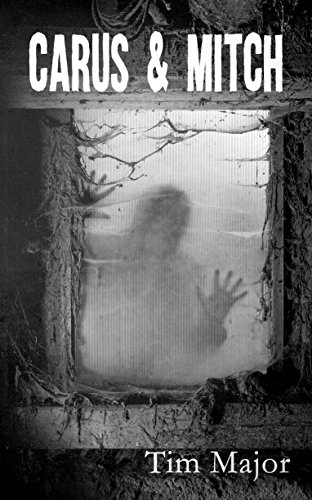
Here’s a case in point. My first published novella, Carus & Mitch, began life as a YA (Young Adult) novel. It was my second attempt at writing a novel, a more-or-less academic exercise along the lines of NaNoWriMo (in which would-be novelists attempt to write 50,000 words of fiction in a single month, without backtracking or engaging their ‘inner editor’). I didn’t have high hopes of the novel being publishable – and it wasn’t. However, the first three chapters, in which the two young female protagonists lived in isolation within a remote house, were pretty good. The following summer, I ripped out and rewrote the first three chapters and reworked the ending entirely. The novella was published in 2015, reviewed well, and was shortlisted for a This Is Horror Award. (Megan Kerr critiqued part of the original YA novel as part of a Writers’ Greenhouse course in late 2012, and her notes were invaluable, despite the fact that that particular chapter was culled entirely. Thank you, Megan!)

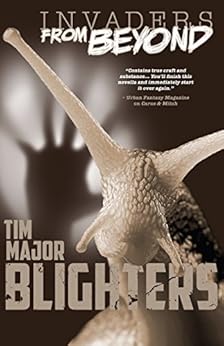
While I enjoy writing short stories for their own sake, with hindsight I’ll often find that they’ve acted more as testing grounds. Perhaps it’s something subconscious – perhaps it’s just easier to commit to developing an idea into a short story, rather than diving into writing a novel. Before submitting to magazines, I’ll sometimes reread a story and then realise that the aspects that now seem most interesting are those that have been left out. My second novella, Blighters, began as a 16,500-word story and became 30,000 words in its final form when it was published in July 2016.

My first published novel, You Don't Belong Here, was originally a 7500-word story about a man who steals a time machine and then hides in a rural manor house in order to conduct tests with it. I wrote it when my wife was pregnant with our first son. Then, three months after Joe was born, I looked again at the story and found that the subject matter seemed oddly suited to my current state of mind. Daniel Faint’s disorientation at his continual leaps forwards in time, his uncertainty about the time and date, his panic about what might have happened in the interim period, felt like an analogy for my child-induced sleeplessness and drowsiness. I reworked the story to take into account these new personal hooks – that is, my own permanent state of disorientation, plus a preoccupation with family and fatherhood. The story grew and grew to become a novel. All of the elements of the short story remain, but now the short story feels like little more than a synopsis of the plot elements. The psychological element was all new.

So, there’s my advice. Never discard anything. Rework failures and mine your shelved stories for anything salvageable. Sometimes the story will only become apparent the second or third time you have a crack at it.

Tim Major's time-travel thriller novel, You Don't Belong Here,  (Snowbooks) is available now. He has also released two novellas, Blighters (Abaddon) and Carus & Mitch (Omnium Gatherum) – the latter was shortlisted for a This Is Horror Award. His short stories have featured in Interzone, BFS Horizons and numerous anthologies. He is the Editor of the SF magazine, The Singularity, and blogs at www.cosycatastrophes.wordpress.com.

I strongly second Tim's advice and it's something I've found to be equally true in my own writing. When I wrote about the things I learnt in the Rope of Words series, one of the most useful things I learnt was the same: Keep your fragments.

Tips for a perfect Summer of Writing

Make it a Summer of Writing

Summer is a busy, social time, so in one sense an odd time for workshops – but it's also a creative time. We forget, sometimes, that we're animals. That like any animal, our energy levels rise with the warm weather, alongside our adventurousness, our sense of fun, our enthusiasm, our interest – which is all, in a sense, our creativity. The long winter months often get the credit for creative endeavour, what with staying indoors and not much to do, but creativity isn't a faut de mieux: it's our lifeblood. Our joy. And like the rest of our joy in life, it jumps up and down and does cartwheels in the summer. That's why I run workshops in the summertime, even though it's also such a busy time – it's the perfect time for adventure and discovery. So here are my tips to create yourself a glorious Summer of Writing.

As well as the workshops, book some time off for yourself to write, whether that means from work, from your family, or a pact with yourself. I suggest treating each workshop as a two-day block, so you're just as "booked off" from 10-4 on the Sunday as if you were at a workshop. (That means no other duties, no errands or chores, no family commitments, no arrangements to meet – just a clear space of time for you and your writing.) If you can, look at also booking a few weekdays or a week off from work, as writing time.

Be strict about your start time and protect the writing time like an angel with a flaming sword – but within that time, be free. You don't need to treat writing time like work and it's much better not to. It isn't work, it's a joy! And the more you enjoy it, the more you want to write. (Enjoying it doesn't mean it's always "easy" – we enjoy doing hard things, too. Just think of crosswords and Sudoku. Enjoying it means it's fun.) Don't set yourself up with a bunch of goals, either – throw all that "SMART" nonsense to the wind, forget about aims, wordcount, page counts, estimates, etc. A good writing day is a day spent writing. That is the only criterium. Protect the time, and within the time be free. There's a rock-solid evidence base behind this advice; you can read more about that here.

Write by hand, unless that's genuinely physically impossible for you. There's fantastic evidence that when we write by hand, we write more, for longer, and better quality. Your handwriting doesn't matter, as long as you can read it. A ballpoint pen will quickly tire your hand out though, because it relies on friction to drag out the ink. If you're right-handed, buy a fountain pen – you can get a Parker from WH Smiths for £20 and under, and their nibs are superb quality. (More expensive pens usually have more expensive casings, not better nibs.) Stock up on ink cartridges while you're at it and cache them everywhere, so you never run out. If you're left-handed, and can't use a fountain pen, try a fineliner or a gel pen. (Gel pens are lovely but run out very quickly.) With no friction, you can write happily for hours without getting a sore hand.

The best part about writing by hand, though, is that you can write anywhere. It's summer! You don't need a dim room to see the screen or a powerpoint nearby. Don't lock yourself in a room at a desk, telling yourself you have to "take this seriously" – go outside! Write in the garden, if you won't be interrupted. Leave the house and go adventuring! Find a coffee shop with a garden or one outdoors, like AMT on Cornmarket. Write in a pub garden (they serve coffee, too). Walk across Port Meadow and sit outdoors at the Perch, or try the lovely garden of the Gardener's Arms. Write in meadows, in parks. Take a packed lunch, a bottle of water, a flask of coffee, and off you go! There are heaps of wonderful places to write outdoors in Oxford. (Check for available loos, too – you'd be surprised; even University Parks has well-kept loos in the middle. And AMT is in emergency striking-distance from the refurbished loos by the Covered Market.) If it's drizzling, or chucking it down, find a covered garden – just being in the fresh air is enlivening and inspiring, and the smell of rain on soil contains a chemical which makes us happy. (More than once I've started writing in University Parks, then walked through a downpour to arrive grinning and drenched at the Jericho Tavern, and slowly steamdried in their covered garden. It's fine to get wet, just make sure the writing stays dry!) All the adventuring makes it much more fun and gives you a much wider range of stimulus and inspiration than you'd get at home at a table or a desk.

Once you start adventuring, you might want a Writing Bag: a sacred, adored bag, big enough to carry your notebook / an A4 pad and any assorted pens or notes you want with you, and waterproof. (This is England, to be fair, even in summer.) I have two, a slim one for just a few essentials, and a glorious great multi-pocketed beast for when I need the Full Monty with me and a packed lunch to boot. Both are leather; the first was a cast-off, many years ago; the beast was a £5 charity shop WIN. The writing lives in the writing bag, along with plenty of spare paper and ink / pens. Mine also has a tiny stapler (with eyes) and spare staples, plus assorted coloured pens. (Okay, 90 coloured pens.) Word to the wise: don't put your waterbottle or coffee flask in your writing bag.

You'll probably have your phone with you too, so here's an expert tip: put it on airplane mode. That's usually the only way the battery will last all day and still leave you enough for some texts or a phone call at the end of your writing. Plus, of course, it spares you that enemy of writing: internet distraction. If an idea is tricky, it's so easy to dive into the instant-affirmation of Facebook notifications instead; having it on airplane nudges you away from that. If you do want to look something up, or browse a bit while you're having a break, you can easily switch it back to normal mode, but the fragile battery life of a smartphone is excellent motivation to switch it back to airplane promptly.

Everyone's concentration span varies – mine is almost exactly an hour, and then I need to float back up for a bit, stare around me, eat some water mint, chat with a passing duck, order another coffee, whatever. Don't flog yourself beyond your concentration span; find your natural pace. (That's where having your phone on airplane really helps; it's easier to find your natural pace without distractions. Also, don't eat random plants unless you definitely know what they are; quite a few are poisonous.) After two or three hours like that, I usually need a longer break, which is generally a good moment to eat my lunch, have a wander, maybe change location, perhaps accept that it really is raining and wedging the umbrella handle into my cleavage isn't totally working. Most people can manage about five hours of sustained concentration total a day. That's hard to believe, given the hours most of us work, but nonetheless true. And writing, as well as being enormous fun, is very sustained concentration. Sometimes I spread those hours out, between 10 and 5, with breaks and lunch and walks; sometimes I do a solid block from 12 to 5:30, with only a few float-up breaks. I've learnt not to push it past the 5 hours, give or take. This is summer; this is life; enjoy the rest of the time for other things as well, like a long relaxing walk home, meeting up with friends for a sunny drink, cooking a meal slowly, whatever you enjoy. (Remember not to schedule any Duties, though, that steal the writing time. Duties are for other time.)

A summer of writing becomes an absolute gift to yourself. Suddenly, setting the time aside for writing isn't a chore, something that could otherwise be used for holiday, or meet-ups, or family time – it's a joy, a luxury, a secret delight. You fall asleep the night before excited to wake up, with your writing bag ready, anticipating the time as if it's a rendezvouz with a lover. You spend your writing days surrounded by beauty, gloating in the wonder of it, staring into your secret worlds. You push on into the autumn, layering on extra tights, scarves, and cardigans. You smile secretly in the winter, as you type up the summer's writing or keep on writing with freezing rain hammering the windows, and as you pass your spots. And you feel your excitement rise, as spring finally starts to warm again, at the thought of being back out there, completely free, completely yourself, writing.

Join in the upcoming Summer of Writing


Make it a Summer of Writing
Orientating the Reader
NEW EVERGREEEN COURSE
50%-off Launch Special

Make your characters, events, and flashbacks crystal clear and memorable, so your story's impact works.

GET IT FOR 50% OFF NOW

Writing in Style
FEB–MAR 2027
Online | In person

Set your styles free, and refine and enliven every page.

BOOKINGS NOW OPEN